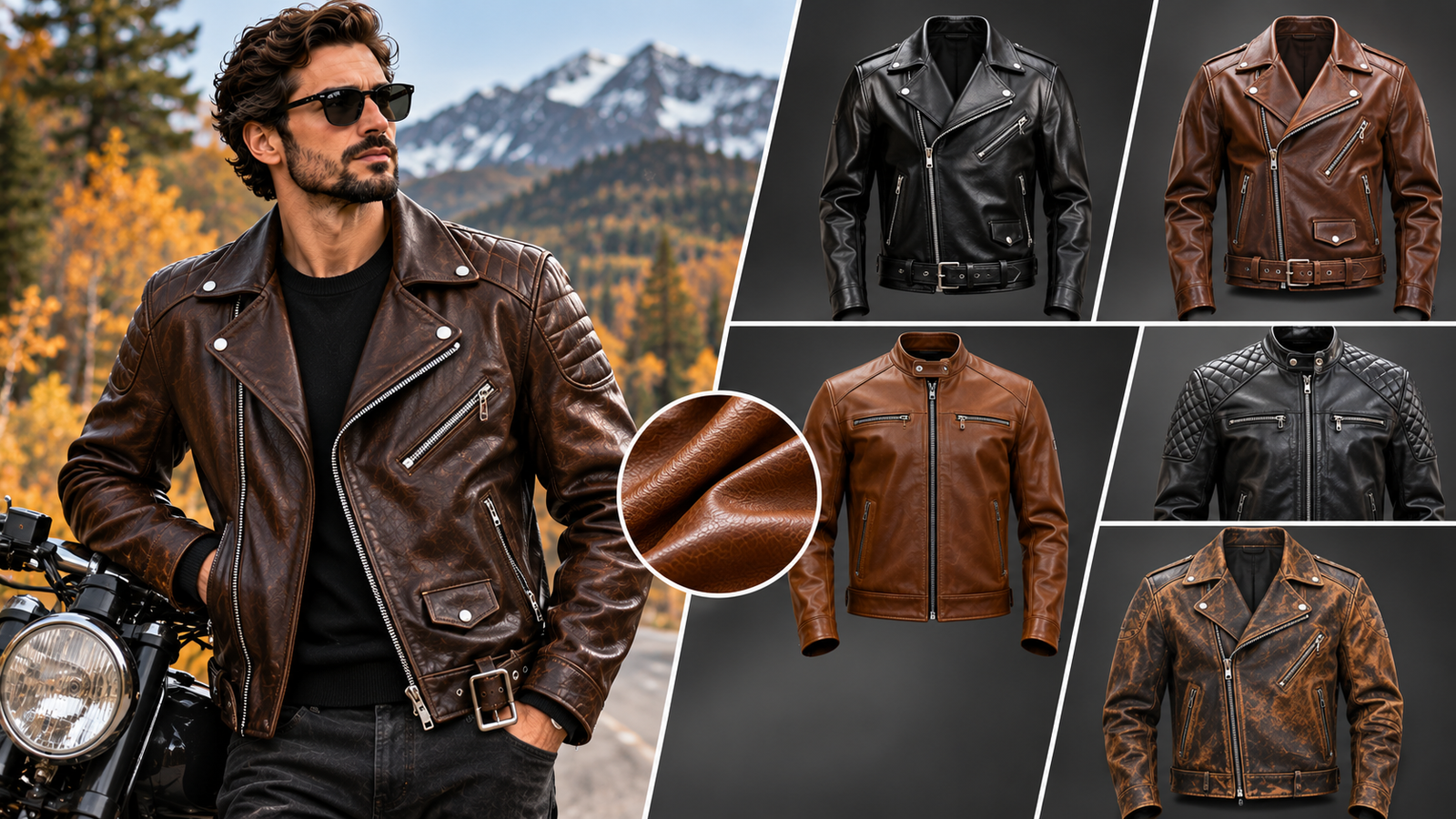
Biker jackets are one of the most recognizable outerwear styles, known for their rugged appearance, distinctive hardware, and fitted silhouettes. Originally associated with motorcycle culture, these jackets have evolved into popular fashion pieces that work with casual, smart-casual, and contemporary outfits.
From classic asymmetrical designs to minimalist café racer styles, biker jackets are available in different materials, colors, and finishes. Understanding these variations helps you choose a jacket that matches your personal style, comfort preferences, and intended use.
This guide covers popular biker jacket styles, leather materials, construction features, fitting considerations, and practical styling tips to help you find the right jacket.
What Is a Biker Jacket?
A biker jacket is a short, structured outerwear style traditionally associated with motorcycle riding. It commonly features an asymmetrical front zipper, wide lapels, snap buttons, and a fitted silhouette. Modern versions are available in different leather materials and designs, making them popular for both motorcycle-inspired fashion and everyday wear.
Traditional motorcycle jackets were developed with functional riding requirements in mind, while modern fashion-oriented biker jackets often prioritize appearance, comfort, and styling versatility.
Although the designs may look similar, a fashion biker jacket should not automatically be considered protective motorcycle equipment.
What Are the Different Types of Biker Jackets?
Biker jackets come in several styles, each offering a different combination of design details, fit, and appearance.
1. Classic Asymmetrical Biker Jacket
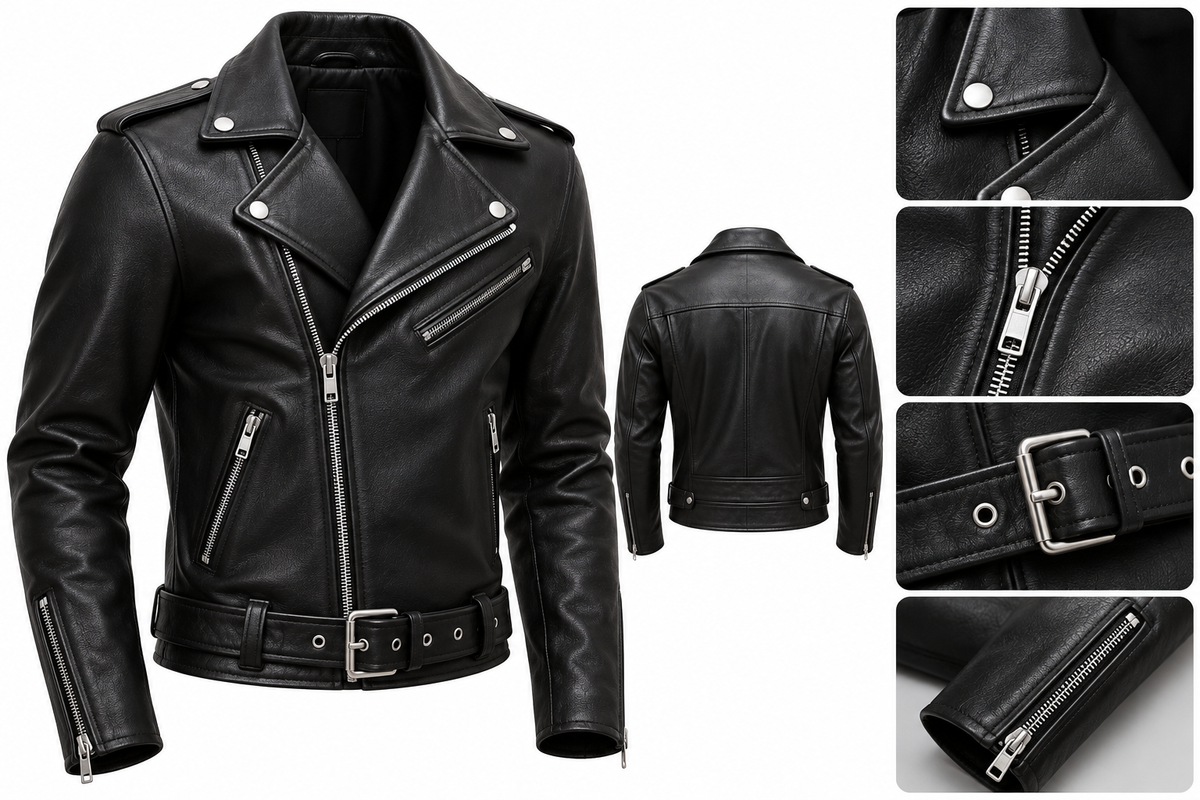
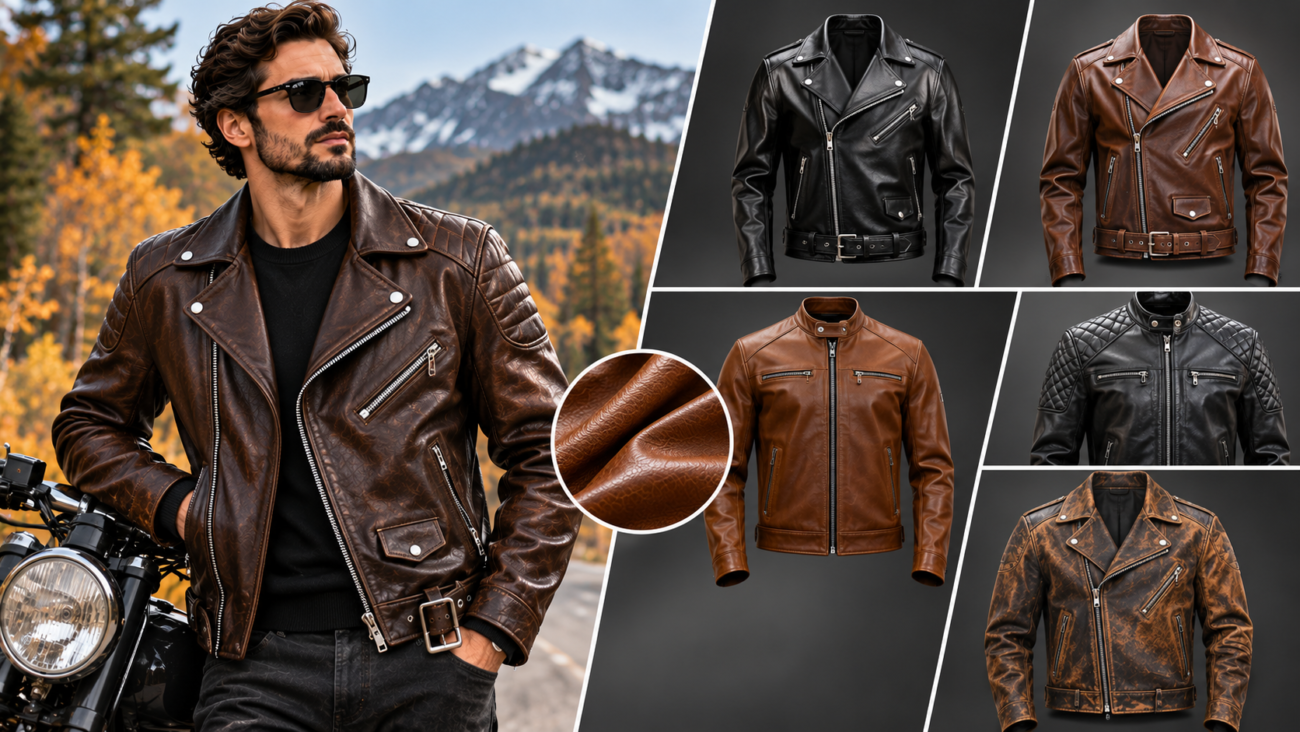
The classic asymmetrical biker jacket is recognized by its diagonal front zipper, wide lapels, and distinctive hardware.
Its traditional design often includes:
- Asymmetrical front zipper.
- Wide lapels with snap buttons.
- Adjustable waist belt.
- Zippered pockets and cuffs.
- Structured shoulders and fitted silhouette.
This style creates a bold appearance and works particularly well with jeans, boots, and simple everyday clothing.
2. Double Rider Leather Jacket
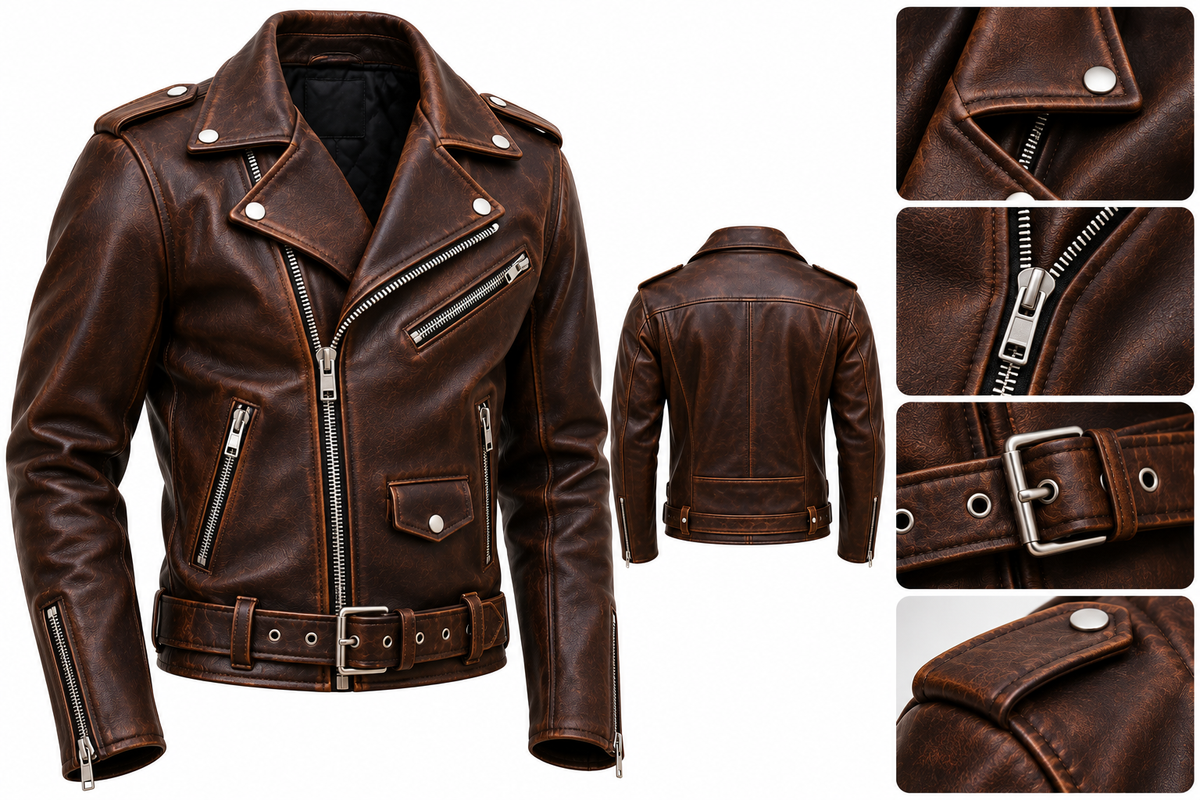
The double rider is a traditional biker jacket design featuring overlapping front panels and prominent hardware.
Common characteristics include:
- Overlapping front zipper construction.
- Wide lapels and snap-down collars.
- Multiple zippered pockets.
- Adjustable waist belt.
- Structured shoulders.
Double rider jackets are often associated with classic motorcycle culture and vintage-inspired fashion. Black leather is the most recognizable option, although brown and distressed finishes are also popular.
3. Café Racer Biker Jacket

Café racer jackets offer a cleaner and more minimalist alternative to traditional biker designs.
Their recognizable features include:
- Straight front zipper.
- Small stand-up or snap-tab collar.
- Minimal decorative hardware.
- Streamlined silhouette.
- Simple pocket construction.
Unlike asymmetrical biker jackets, café racers generally have a more understated appearance. They are suitable for everyday casual outfits and minimalist styling.
4. Quilted Biker Jacket
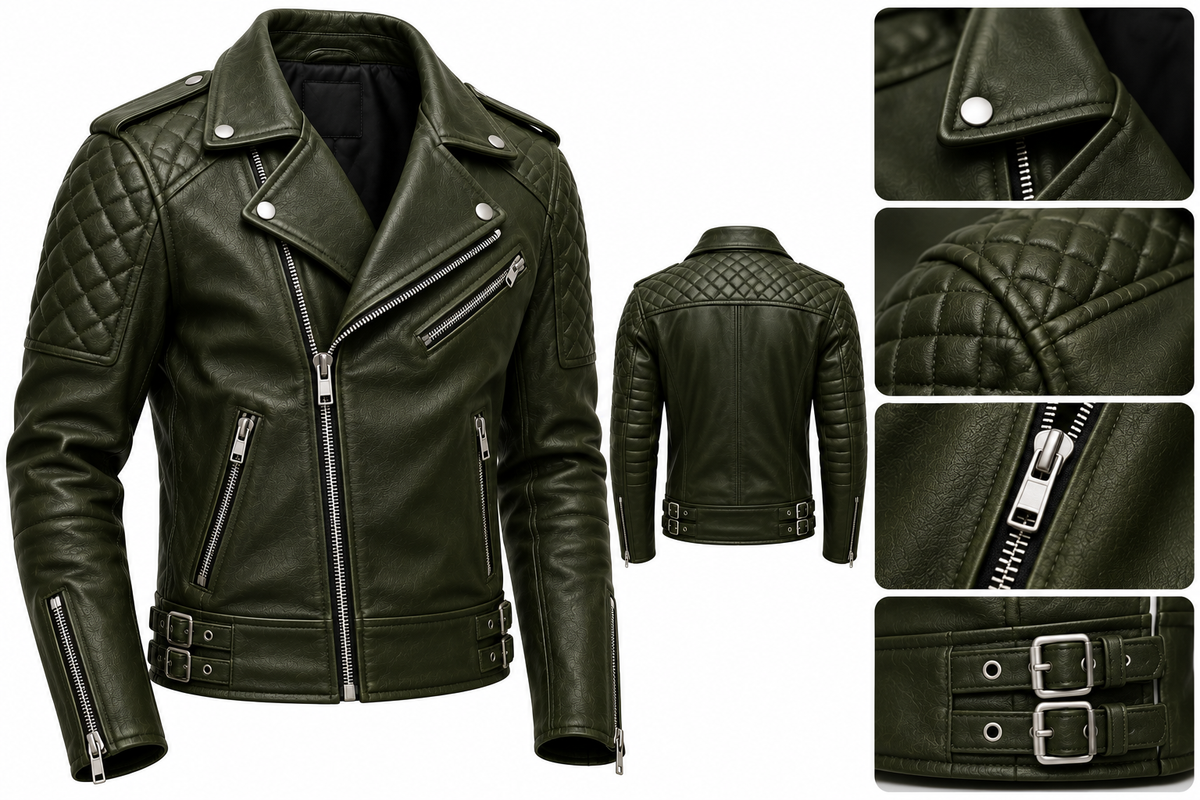
Quilted biker jackets combine traditional biker styling with decorative stitched panels.
Quilting is commonly found on the shoulders, sleeves, and elbows, creating a distinctive textured appearance.
These jackets often feature:
- Quilted shoulder panels.
- Reinforced-looking sleeve details.
- Asymmetrical or straight zipper closures.
- Traditional biker hardware.
- Structured leather construction.
They are a suitable option for buyers who prefer additional detailing without moving too far away from the classic biker silhouette.
5. Vintage and Distressed Biker Jacket
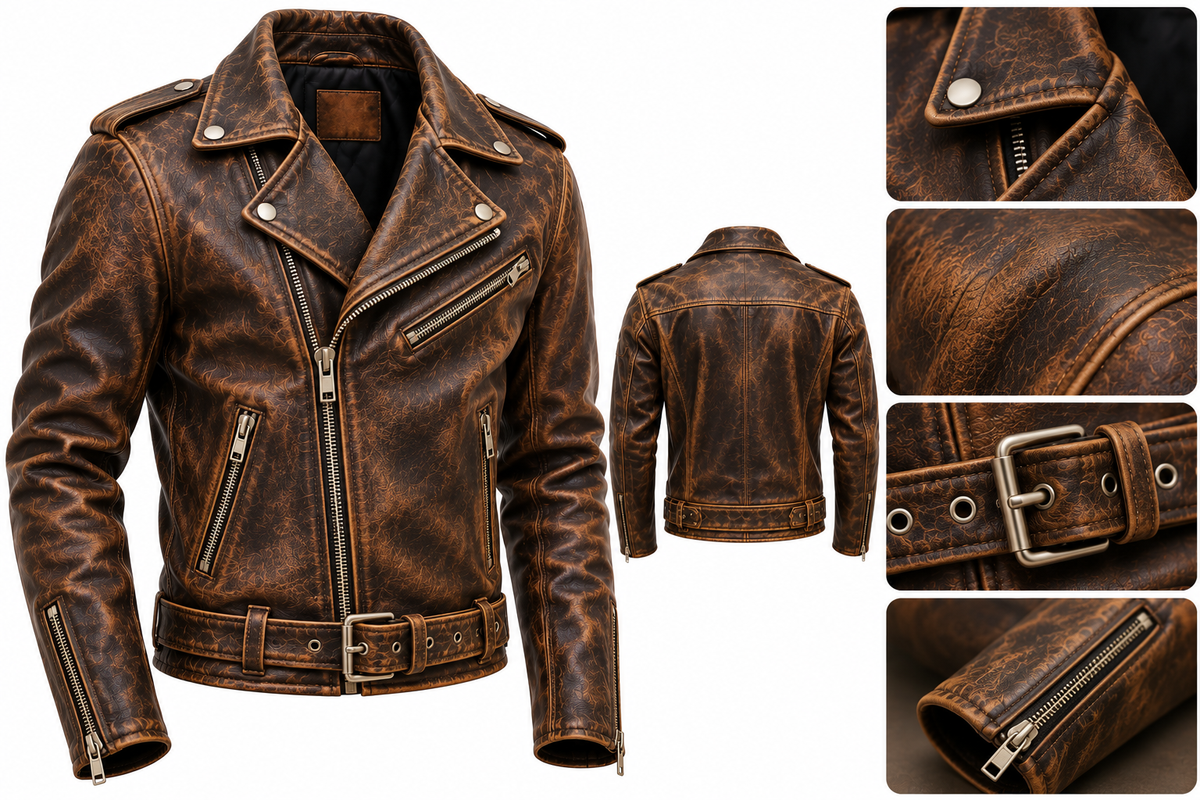
Vintage and distressed biker jackets feature aged-looking leather finishes that create a rugged, worn-in appearance.
Common characteristics include:
- Distressed or washed leather surfaces.
- Vintage-inspired metal hardware.
- Slightly faded or uneven coloring.
- Traditional biker silhouettes.
- Antique-style finishing.
These jackets work particularly well with denim, casual shirts, boots, and relaxed outfits. Their natural-looking surface variations make them popular among people who prefer vintage-inspired fashion.
What Materials Are Used in Biker Jackets?
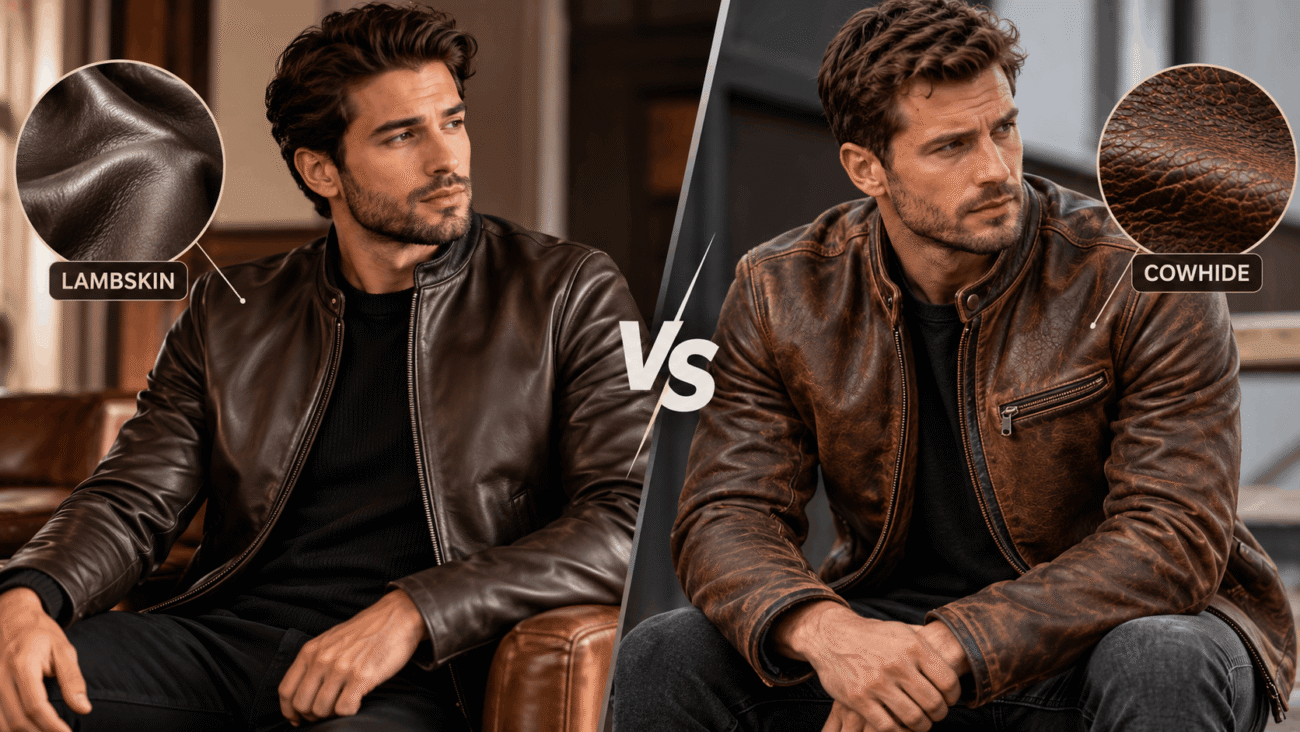
The leather or alternative material used in a biker jacket influences its texture, weight, flexibility, appearance, and maintenance requirements.
| Material | Main Characteristics | Common Use |
| Cowhide leather | Firm, structured, and durable | Traditional biker jackets |
| Lambskin leather | Soft, lightweight, and supple | Fashion-oriented biker jackets |
| Goatskin leather | Flexible with a distinctive grain | Everyday leather jackets |
| Suede leather | Soft, textured, and matte | Casual biker-inspired styles |
| Faux leather | Synthetic alternative to animal leather | Fashion-focused designs |
Apart from material type, several other factors influence jacket quality:
- Leather thickness: Affects the jacket’s structure, weight, and flexibility.
- Tanning process: Influences leather characteristics and overall feel.
- Leather finishing: Determines surface appearance, texture, and color.
- Construction: Stitching, panel assembly, and reinforcement contribute to the finished product.
Choosing the right material depends on your preferred appearance, comfort, budget, and intended use.
Key Features to Look for in a Quality Biker Jacket
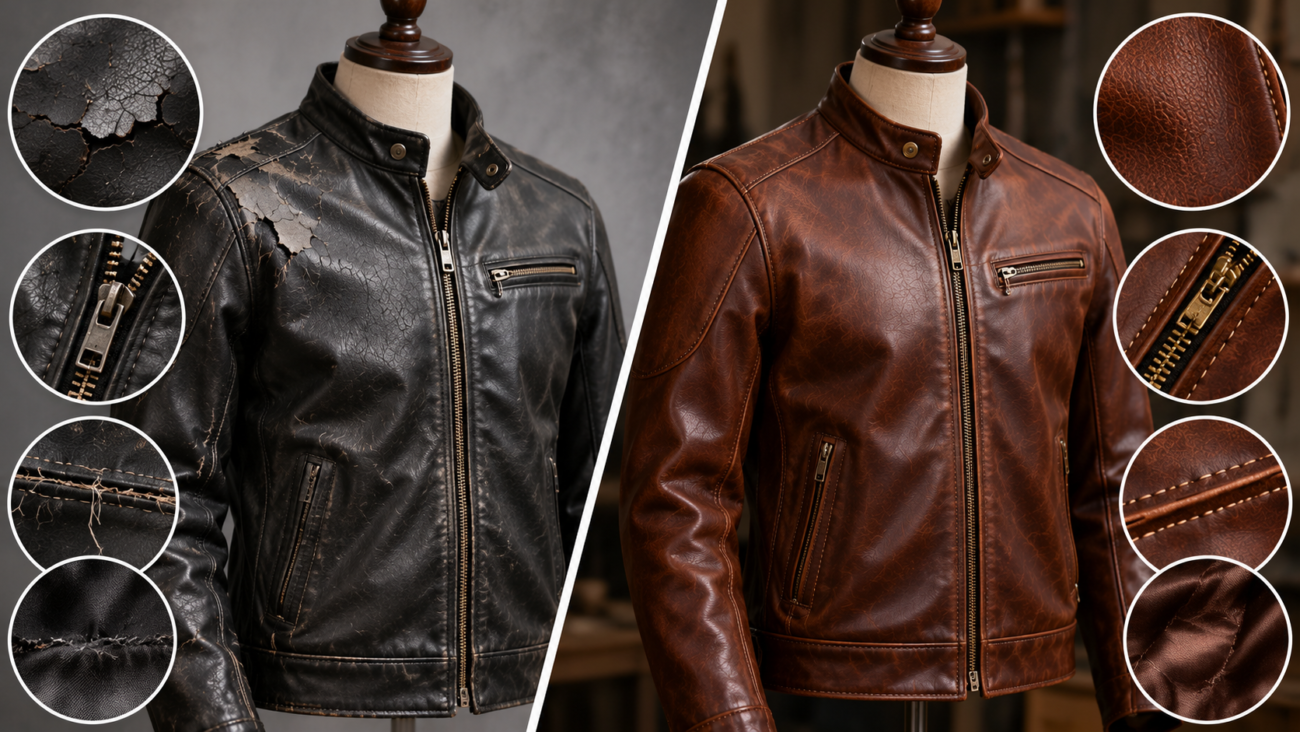
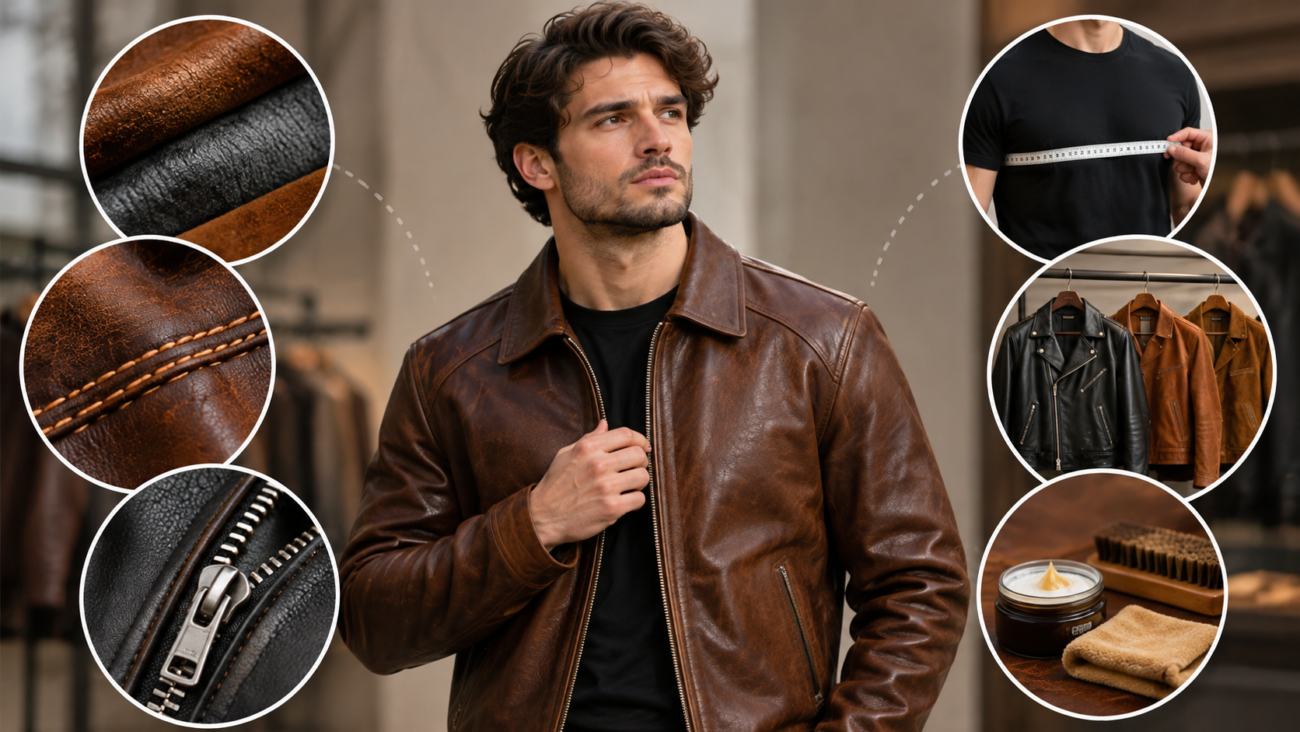
A biker jacket’s overall quality depends on more than its leather exterior. Construction details and finishing also influence its appearance, comfort, and long-term performance.
Zippers and Hardware: Check the quality and movement of zippers, snaps, buckles, and other metal components. They should be securely attached and operate smoothly.
Stitching and Construction: Look for consistent stitching, properly aligned panels, reinforced seams, and securely attached pockets.
Leather Quality: Evaluate the leather type, grain, thickness, surface consistency, and finishing. Ask for clear material specifications rather than relying on general descriptions.
Lining: Check the interior material, stitching, and attachment. Choose lining according to your comfort preferences and intended season.
Fit and Movement: Make sure the jacket allows comfortable movement around the shoulders, chest, and arms without excessive pulling or restriction.
These details can help you distinguish a well-constructed biker jacket from one that prioritizes appearance over quality.
How Should a Biker Jacket Fit?
A biker jacket should provide a comfortable, structured fit without restricting movement. Traditional designs generally have a closer silhouette, but the ideal fit depends on the jacket style and how you plan to wear it.
Consider these five fitting points:
- Shoulders: Shoulder seams should sit naturally without extending too far beyond your shoulders.
- Chest: The jacket should feel secure while allowing comfortable movement.
- Sleeves: Sleeves should reach the wrists without excessive bunching.
- Waist: The jacket should follow your natural shape without feeling restrictive.
- Length: Traditional biker jackets generally end around the waist or upper hip.
Biker jackets are commonly available in three fits:
Slim Fit: Provides a close-fitting silhouette and works well for a modern, streamlined appearance.
Regular Fit: Offers a balanced combination of comfort and structure, making it suitable for everyday wear.
Relaxed Fit: Provides additional room around the chest and body, making layering easier.
Before purchasing, compare your body measurements with the manufacturer’s size chart. Our Complete Sizing Guide can also help you understand important fitting measurements.
How to Style a Biker Jacket
Biker jackets are versatile enough to work with different clothing combinations. The right styling depends on the jacket’s color, design, and the occasion.
1. Classic Casual Look
A classic black biker jacket pairs naturally with a white or neutral T-shirt and blue or black jeans.
Complete the outfit with sneakers or leather boots. This simple combination works well for everyday activities, casual outings, and weekend wear.
2. All-Black Outfit
An all-black outfit creates a bold and coordinated appearance.
Combine a black leather biker jacket with:
- Black T-shirt or fitted shirt.
- Black jeans or trousers.
- Black leather boots.
Keep accessories minimal to maintain a clean, understated look.
3. Smart-Casual Look
For a more polished appearance, choose a brown or black biker jacket with a neutral sweater or fitted shirt.
Pair it with tailored trousers and Chelsea boots. A clean jacket design with minimal hardware works particularly well for this combination.
4. Fall and Winter Layering
Biker jackets can also work in colder seasons when paired with suitable layers.
Try these combinations:
- Biker jacket over a neutral hoodie.
- Leather jacket with a knitted sweater.
- Brown biker jacket with a cream turtleneck.
- Black biker jacket with a charcoal sweatshirt.
Choose a properly lined jacket when additional warmth is required. Avoid bulky layers that restrict movement or affect the jacket’s fit.
How to Choose the Right Biker Jacket
Before purchasing, consider the following factors to find a jacket that matches your requirements.
- Choose the right style: Decide between classic asymmetrical, double rider, café racer, quilted, and distressed designs.
- Select suitable leather: Compare cowhide, lambskin, goatskin, and suede according to your preferences.
- Inspect construction: Check stitching, zippers, hardware, seams, and finishing.
- Find the correct fit: Choose a silhouette that provides comfortable movement.
- Consider seasonal use: Evaluate the lining and insulation if you plan to wear the jacket during colder months.
- Select a versatile color: Black and brown are practical choices for different outfits.
Also consider your budget, manufacturing quality, and intended use before making a final decision.
For more detailed purchasing advice, explore our Complete Buying Guide to understand the important features and specifications to evaluate before purchasing a leather jacket.
You can also read A Complete Price Guide to learn about the factors that influence leather jacket pricing.
Frequently Asked Questions About Biker Jackets
What is the difference between a biker jacket and a motorcycle jacket?
A biker jacket is a fashion style inspired by traditional motorcycle outerwear, often featuring asymmetrical zippers, wide lapels, and distinctive hardware. A motorcycle jacket is specifically designed for riding and may include protective armor, abrasion-resistant materials, and reinforced construction. Not every biker jacket provides motorcycle protection.
Are biker jackets still in style?
Yes. Biker jackets remain popular because their distinctive design works with both classic and contemporary outfits. Black and brown leather versions are particularly versatile, while café racer, quilted, and distressed designs offer additional styling choices. Their combination of structured silhouettes and recognizable details keeps them relevant.
Which leather is best for a biker jacket?
Cowhide is a popular option for traditional biker jackets because of its structured feel and durability. Lambskin is preferred for its softness and flexibility, while goatskin offers a distinctive grain and balanced flexibility. The best choice depends on your desired appearance, comfort, and intended use.
Should a biker jacket fit tight or loose?
A biker jacket should generally have a structured, close-to-regular fit without restricting movement. The shoulders should align naturally, and the chest should allow comfortable breathing and movement. If you plan to wear sweaters underneath, consider a slightly roomier fit.
Can you wear a biker jacket in winter?
Yes. A biker jacket can be worn in winter when it has suitable lining or insulation. Layering with sweaters, hoodies, or thermal clothing can provide additional warmth. For particularly cold conditions, consider insulated or shearling-lined designs rather than lightweight, unlined jackets.
What is the difference between a biker jacket and a café racer jacket?
A traditional biker jacket commonly features an asymmetrical zipper, wide lapels, and multiple hardware details. A café racer jacket generally has a straight front zipper, smaller collar, and minimalist design. Both are leather outerwear styles, but café racers offer a cleaner and more understated appearance.
Are biker jackets suitable for everyday wear?
Yes. Biker jackets are suitable for everyday wear because they pair easily with jeans, T-shirts, sweaters, and boots. Classic black and brown designs are particularly versatile. For regular use, choose comfortable leather, reliable construction, and a fit that complements your daily wardrobe.
Final Thoughts: Finding the Right Biker Jacket
Biker jackets combine distinctive design, versatile styling, and a recognizable outerwear silhouette. Whether you prefer a traditional double rider, minimalist café racer, quilted design, or vintage distressed finish, each style offers a different appearance.
When choosing a biker jacket, focus on leather quality, construction, hardware, lining, and comfortable fit. Consider how frequently you plan to wear it and whether its material and design suit your intended use.
A well-selected biker jacket can become a versatile part of your wardrobe, working with casual, smart-casual, fall, and winter outfits.
Ultimately, the right biker jacket should combine a design you like with suitable materials, reliable construction, and a comfortable fit.