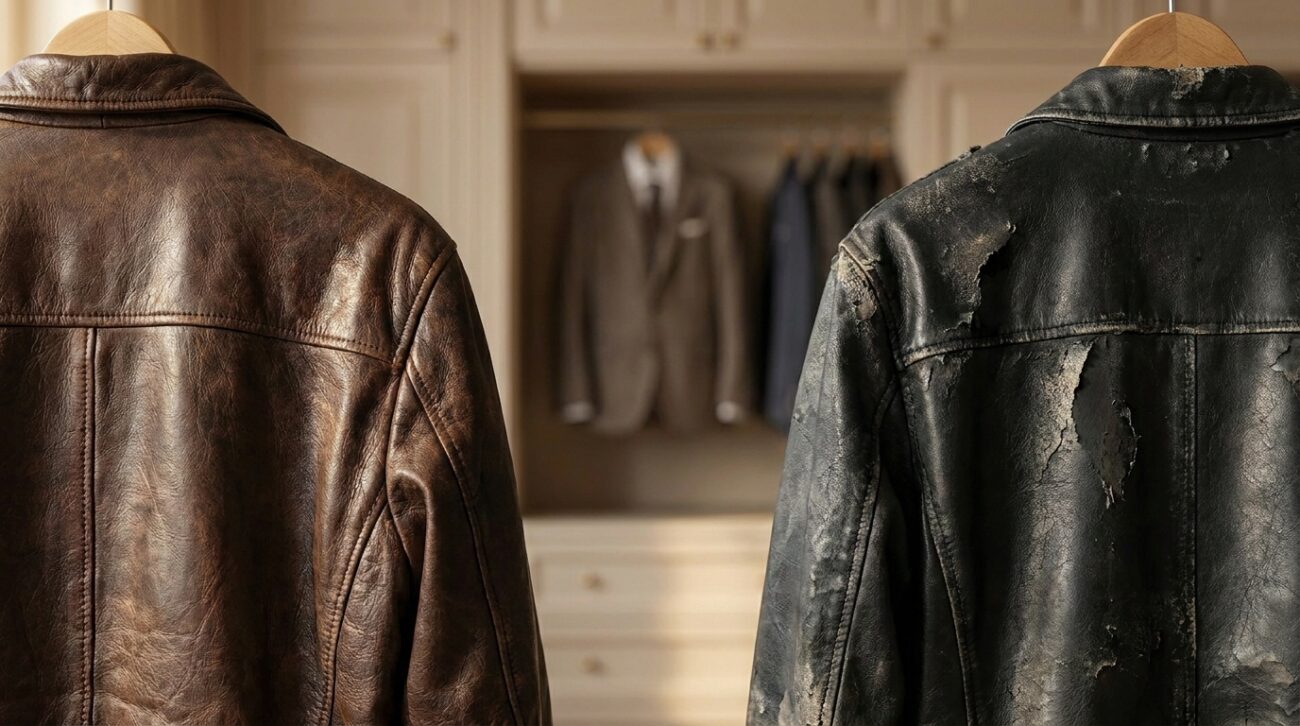
The best leather jacket color is usually the one that works with the clothes you already own. Black offers maximum versatility and a sharper appearance, while dark brown creates a warmer, more rugged look. Lighter shades such as tan and cognac feel more relaxed, while burgundy, navy, and olive can give a familiar outfit a different character.
Color should not be considered separately from fit, leather quality, jacket style, and finish. A well-chosen shade becomes much easier to wear when these elements work together.
Is Black or Brown Better for a Leather Jacket?
Black: The Easiest Everyday Option

Black is the safest starting point for men who want one jacket that can handle different outfits and occasions. It works naturally with white, gray, blue denim, black trousers, boots, and sneakers.
A black leather jacket can create a clean urban appearance with jeans and a T-shirt, while the same color can look sharper with dark trousers and a button-down shirt.
The style of the jacket also changes how black leather feels. A black biker can look rugged and rebellious, while a simple racer or bomber can appear much cleaner.
If you’re comparing different silhouettes, the differences between biker, bomber, and other designs are covered in the guide to leather jacket styles every man should own.
Dark Brown: A Warmer Alternative

Dark brown works particularly well with blue denim, beige, cream, olive, tan, and other earthy colors.
Compared with black, brown generally creates a softer visual contrast. It suits men who prefer heritage-inspired clothing, boots, denim, flannel, chinos, and relaxed everyday outfits.
Brown is also a strong option when you want a leather jacket to feel less formal or less severe than black.
What Other Leather Jacket Colors Work for Men?
Tan and Cognac

Tan and cognac bring a lighter, more noticeable appearance. They pair particularly well with blue jeans, white shirts, cream knitwear, navy, and neutral clothing.
Because lighter leather shows marks more easily, it also requires more attention during regular wear. Proper cleaning becomes particularly important with lighter shades, and techniques such as those explained in how to clean a leather jacket at home can help maintain its appearance.
Burgundy and Oxblood

Burgundy and oxblood offer color without the brightness of traditional red. Their deep tones work with black, charcoal, navy, cream, and dark denim.
These shades are particularly useful when you already own a black or brown jacket and want a second option with more personality.
Navy

The Navy is an understated alternative to black. It works well with gray, white, denim, beige, and chinos, making it suitable for smart-casual wardrobes.
Olive Green

Olive has an earthy, casual quality that works naturally with black, cream, beige, denim, and other muted shades. It is particularly suited to relaxed everyday dressing.
How Should Your Wardrobe Influence the Color?
Look at the clothes you actually wear most often.
If your wardrobe contains mainly black, white, and gray, black, navy, and burgundy will generally integrate easily.
If you frequently wear blue denim, beige, cream, olive, and tan, brown, cognac, tan, and olive are natural choices.
If your wardrobe is mostly neutral, you have greater flexibility. In that situation, decide whether you want the jacket to blend into your outfits or become the main visual feature.
This approach also makes more sense than choosing a color first and then buying several new pieces simply to match it.
Does Leather Quality Affect How the Color Looks?
Yes. Color alone does not determine how expensive or refined a jacket appears.
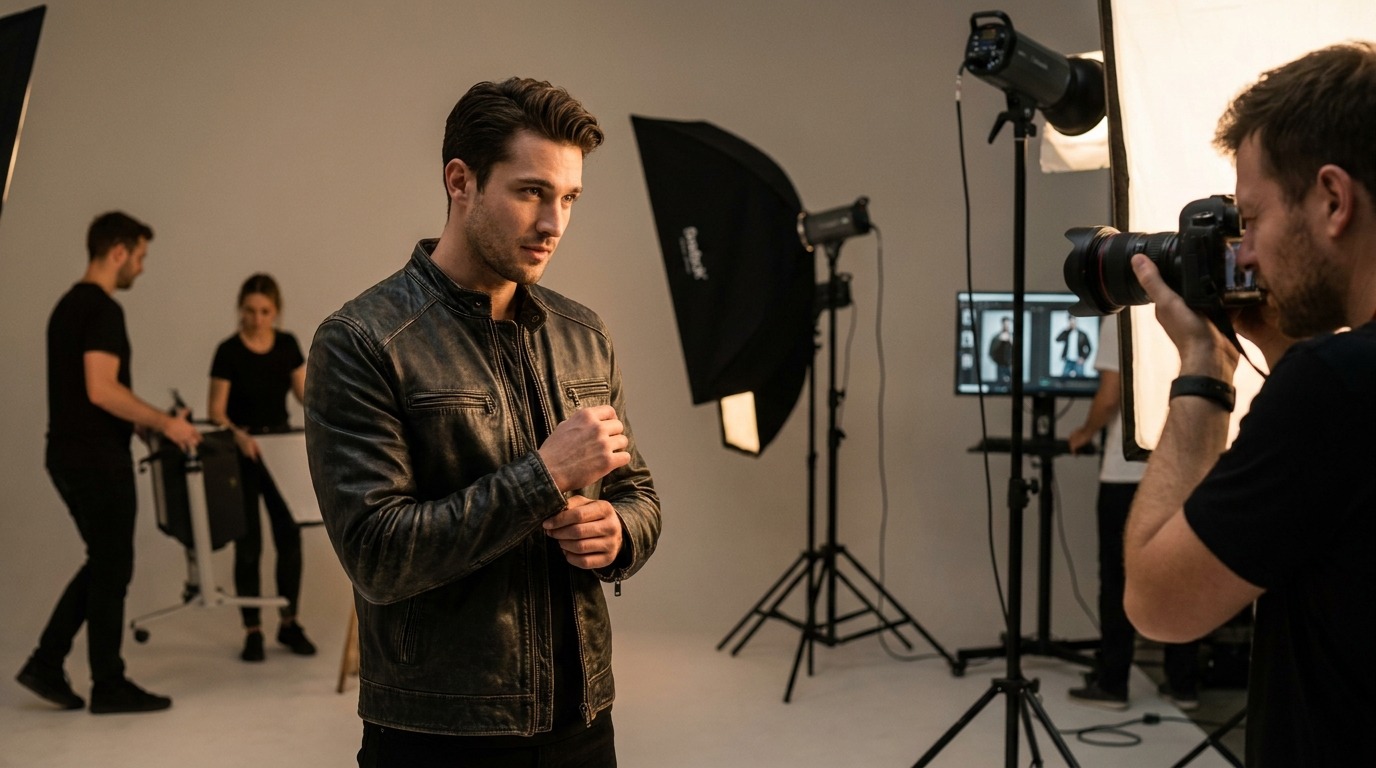
Leather grain, texture, thickness, finish, and construction all influence the final appearance. A smooth black jacket with a subtle finish can look completely different from a heavily distressed black jacket.
When assessing a jacket, pay attention to details such as the leather surface, stitching, lining, zippers, and hardware. The practical signs covered in how to identify a high quality leather jacket are useful regardless of the color you choose.
Leather type can also influence the visual character. Full-grain leather tends to retain more of the hide’s natural character, while softer leathers can create a different drape and surface. The comparison between full-grain and lambskin leather jackets explains why material choice matters alongside appearance.
Which Colors Work Best for Different Occasions?
| Occasion | Suitable Colors | Style Effect |
| Everyday casual | Black, brown | Easy and versatile |
| Smart casual | Black, navy, dark brown | Clean and polished |
| Evening | Black, burgundy | Sharp and refined |
| Rugged outfits | Brown, olive, tan | Relaxed and earthy |
| Spring/daytime | Tan, cognac | Light and casual |
| Autumn/winter | Black, brown, burgundy | Rich and seasonal |
The jacket’s silhouette matters here too. A polished black racer may work for a cleaner evening outfit, while a distressed brown biker naturally suits casual clothing.
Does Jacket Fit Matter More Than Color?
Color can make a jacket easier to style, but poor fit can undermine the entire outfit.
The shoulders should sit correctly, the sleeves should finish around the wrist, and the body should allow comfortable movement without appearing excessively loose.
Before focusing heavily on color, make sure you understand the basic principles explained in how a leather jacket should fit.
For measurements, it also helps to compare your body measurements with a jacket’s actual dimensions rather than relying only on S, M, L, or XL labels. The leather jacket measurement guide covers this process in practical detail.
What Should You Avoid When Matching a Leather Jacket?
One common mistake is combining too many strong colors. If the jacket is burgundy or another noticeable shade, keep the rest of the outfit relatively restrained.
Another mistake is buying a color that only works with one or two outfits. A statement jacket can be useful, but it should still have a practical place in your wardrobe.
You should also consider the leather finish. Matte leather tends to look more casual, while polished leather can appear sharper and more formal.
Finally, don’t let color distract you from construction. Details such as zippers, stitching, and hardware can affect both appearance and long-term usability. The guide to leather jacket zippers, hardware, and stitching explains what to look for.
Is Black or Brown Better as a First Jacket?
For most men buying their first leather jacket, black is the easier choice when versatility is the priority.
Dark brown can be the better option if your wardrobe already revolves around denim, beige, cream, olive, and other warm colors.
After owning a dependable neutral jacket, a second jacket in burgundy, tan, cognac, navy, or olive can provide more variety.
If you’re still deciding between jacket construction, material, fit, and price, the broader guide to choosing the perfect leather jacket for men can help you evaluate those factors together.
Where Should Color Fit Into Your Buying Decision?
Color should be one part of the decision rather than the entire decision.
Start with your wardrobe, then consider the jacket’s style, leather type, fit, finish, construction, and intended use. Once those factors are clear, selecting a suitable shade becomes much easier.
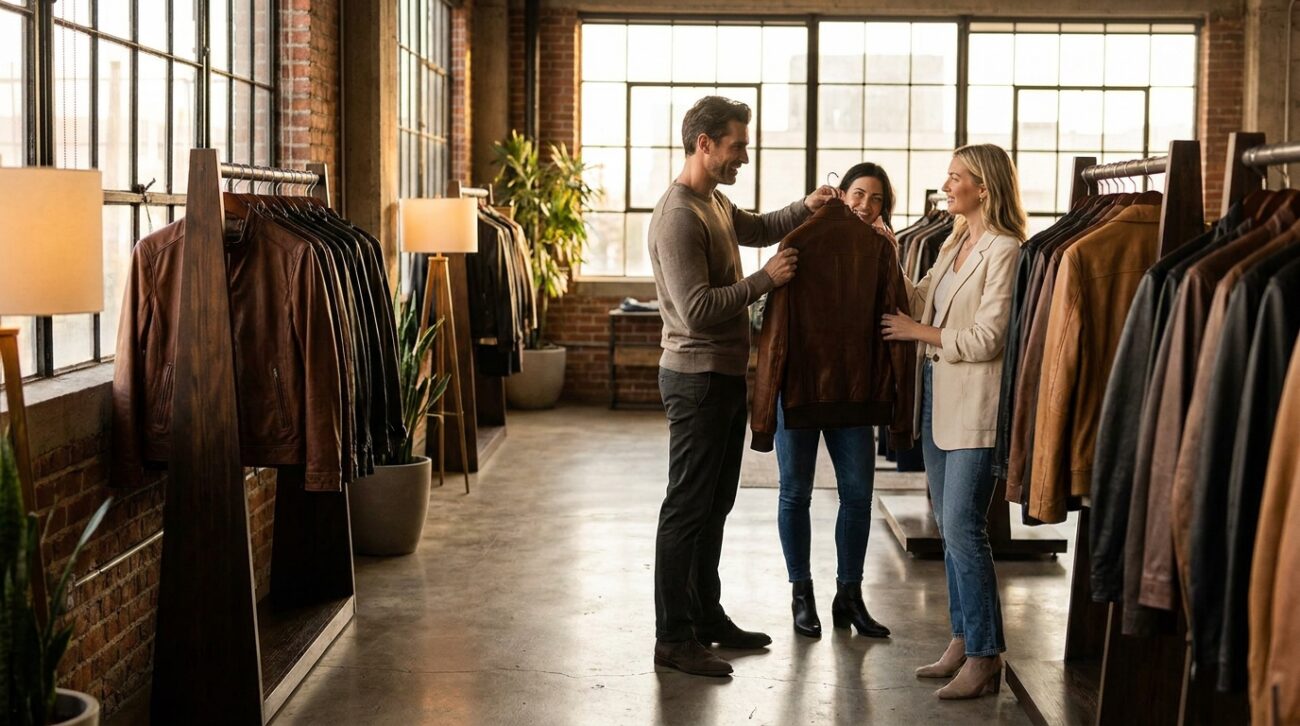
For men comparing different styles and colors in one place, The Crown Leather provides the broader context of available leather outerwear, while the men’s leather jacket collection is the more relevant destination when you’re ready to compare wearable options.
Conclusive Thoughts
The best color depends on what you want the jacket to do for your wardrobe. Black is the strongest all-purpose choice, dark brown offers warmth and character, and tan or cognac can brighten casual outfits. Burgundy, navy, and olive are useful when you want something less conventional without moving too far from versatile styling.
Rather than following a color trend, look at your existing clothes and the situations in which you will wear the jacket. A color that naturally works with your wardrobe will almost always get more use.
FAQs
Is black or brown better for a leather jacket?
Black is generally more versatile, while brown creates a warmer and more relaxed appearance. Black works particularly well with cool neutrals and dark outfits, whereas brown complements denim and earthy colors.
Is black the most versatile leather jacket color for men?
Black is usually the easiest color to coordinate because it works with white, gray, denim, black trousers, boots, sneakers, and many different jacket styles.
What colors look best with a brown leather jacket?
Brown leather works especially well with blue, white, cream, beige, olive, tan, and other earthy shades. These combinations create a warm and balanced casual appearance.
Is a tan leather jacket easy to style?
Tan leather jackets work well with denim, white, cream, navy, and neutral clothing. Their lighter appearance makes them particularly suitable for daytime and relaxed outfits.
Can men wear a burgundy or oxblood leather jacket casually?
Burgundy and oxblood jackets work well with dark denim, black trousers, gray, cream, and muted colors. Their deep tone adds personality without becoming excessively bright.
How do I choose a leather jacket color that matches my clothes?
Your existing wardrobe should guide the decision. Black, white, and gray wardrobes generally suit black and navy, while denim and earthy clothing pair naturally with brown, tan, cognac, and olive.
Is matte or glossy leather better?
Matte leather usually creates a more understated casual appearance, while glossy leather looks sharper and more polished. The better option depends on your clothing, jacket style, and intended use.
Can older men wear leather jackets?
Older men can wear leather jackets confidently when the fit, proportion, and styling are appropriate. Classic colors such as black and dark brown can create a particularly refined appearance.