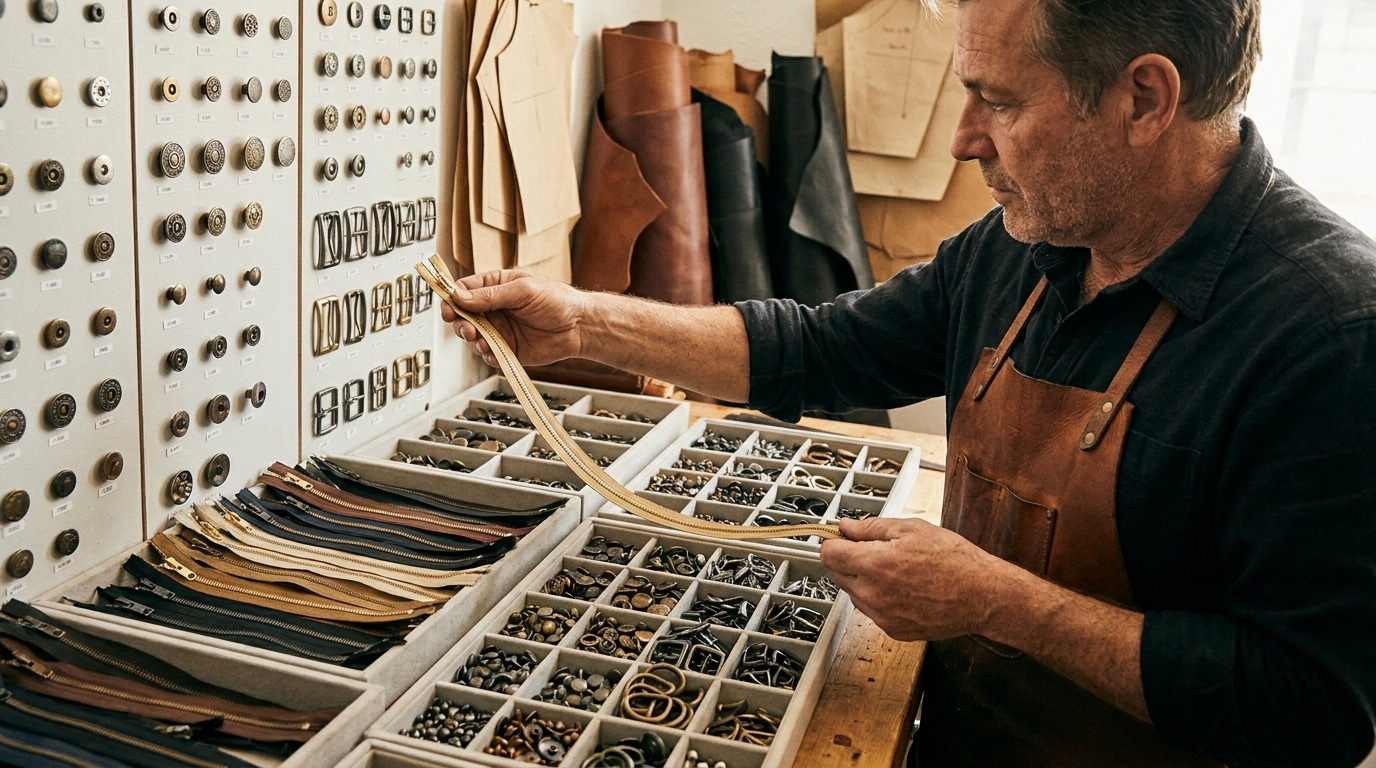
When shopping for a leather jacket, most people focus on one thing, the leather itself. While the type and quality of leather certainly matter, they tell only part of the story. A beautifully finished jacket can still become frustrating to wear if the zipper sticks, the snaps loosen, or the seams begin to separate after a few months.
In reality, the leather often outlasts the components holding the jacket together. Weak hardware and poor stitching are among the most common reasons otherwise attractive jackets need repairs or early replacement.
Understanding leather jacket hardware helps you look beyond marketing claims and judge a jacket by the details that affect everyday performance. Whether you’re buying your first leather jacket or adding another to your wardrobe, knowing what to inspect can help you make a more informed decision.
This guide explains the purpose of each hardware component, how quality construction differs from budget manufacturing, and the signs that indicate a jacket has been built to last.
Why Leather Jacket Hardware Matters More Than Most Buyers Realize
The best leather in the world cannot compensate for weak construction.
A jacket is opened and closed hundreds of times throughout its life. Sleeves flex with every movement, pockets are constantly used, and stress builds around the shoulders, cuffs, and waist every time the jacket is worn. These repeated movements place far more strain on the hardware and stitching than many buyers realize.
That’s why experienced buyers rarely judge a jacket by appearance alone. They pay close attention to the zippers, thread, hardware finish, and seam construction because these components often determine how well the jacket performs over years of regular wear.
If you’ve ever owned a jacket with a broken zipper or loose stitching, you’ve already experienced how small details can affect the overall value of an otherwise good garment.
The Parts of a Leather Jacket That Influence Durability
Quality construction isn’t limited to one component. Every part of the jacket contributes to its overall performance.
Main Zipper
The main zipper is the most frequently used part of the jacket. It should operate smoothly without catching, separating, or requiring excessive force.
A well-made zipper feels solid and remains aligned even after years of repeated use.
Pocket Zippers
Pocket zippers experience constant movement and should open easily while remaining secure.
Quality pocket zippers also help maintain the clean appearance of the jacket over time.
Snaps and Buttons
Depending on the jacket style, snaps or buttons may appear on cuffs, collars, storm flaps, or pockets.
They should fasten securely without feeling loose or overly stiff.
Buckles and Adjustment Tabs
Often found on biker and belted jackets, buckles help adjust the fit while adding structural support.
Durable buckles resist bending and maintain their finish through regular use.
Rivets and Reinforcement Points
Rivets strengthen areas exposed to repeated stress, particularly around pockets and adjustment straps.
Properly installed rivets help distribute pressure and reduce strain on the surrounding leather.
Stitching
Although technically not hardware, stitching is one of the most important structural elements of any leather jacket.
Consistent stitching holds every panel together and determines how well the jacket maintains its shape over time.
Leather Jacket Zippers Explained
Not all zippers are created equal. Their material, construction, and manufacturing precision all influence how smoothly they operate and how long they last.
Brass Zippers
Brass has long been considered one of the most dependable materials for leather jacket zippers.
It offers excellent strength, naturally resists corrosion, and develops an attractive patina with age. Brass hardware is commonly found on heritage-inspired and motorcycle jackets because it complements the character that genuine leather develops over time.
Best for
- Heritage jackets
- Vintage styles
- Heavy-duty everyday wear
Nickel Hardware
Nickel provides a cleaner, brighter appearance than brass.
It offers good corrosion resistance while pairing well with modern black, grey, and minimalist jackets.
Because of its polished finish, nickel hardware often creates a more contemporary aesthetic.
Best for
- Modern leather jackets
- Smart casual styles
- Minimalist designs
Gunmetal Finish
Gunmetal combines durability with a subtle appearance that doesn’t draw attention away from the leather itself.
Its darker finish works especially well on black leather jackets where a low-contrast look is preferred.
Best for
- Contemporary jackets
- Cafe racers
- Urban styling
Antique Brass
Antique brass provides the character of aged metal without waiting years for natural wear.
It’s frequently used on vintage-inspired jackets where a weathered appearance complements distressed leather finishes.
Coil and Plastic Zippers
Coil zippers are lightweight and flexible, making them suitable for lightweight fashion jackets.
However, they generally don’t provide the same durability or premium feel as quality metal zippers, particularly on heavier leather garments.
For jackets intended to last many years, robust metal hardware usually offers greater long-term reliability.
Are Premium Zippers Really Worth It?
Many buyers have heard of YKK zippers, but few understand why they’re widely respected throughout the apparel industry.
High-quality zipper manufacturers maintain tighter production tolerances, resulting in smoother operation, better alignment between the teeth, and greater long-term reliability. These small differences reduce the likelihood of sticking, separation, or premature wear.
That doesn’t mean every non-YKK zipper is poor quality. A well-manufactured zipper from another reputable supplier can also perform exceptionally well. The important point is consistency. A smooth-operating zipper with strong construction is almost always a better indicator of quality than branding alone.
How to Identify a High-Quality Zipper Before Buying
Whether you’re shopping in-store or online, there are several details worth inspecting before making a purchase.
Look for:
- Evenly aligned zipper teeth
- A slider that moves smoothly without resistance
- Reinforced stitching where the zipper meets the leather
- Secure top and bottom stops
- No visible gaps or twisting along the zipper tape
- Consistent spacing from top to bottom
If you’re buying online, zoom into the product photos whenever possible. Close-up images often reveal the quality of stitching, hardware finish, and zipper installation more clearly than the written product description.
Why Stitching Is Just as Important as the Leather
High-quality leather attracts attention, but stitching is what keeps a jacket performing year after year. Every panel, sleeve, collar, and pocket depends on strong, consistent seams to handle daily movement and stress.
Unlike fabric, leather doesn’t self-heal. Every needle hole permanently punctures the hide, which means poor stitching can’t simply be corrected later without affecting the material. Manufacturers must therefore balance stitch spacing, thread strength, and seam placement carefully.
Leather and construction should always be evaluated together. While this article focuses on craftsmanship, understanding leather grades such as full-grain, top-grain, and genuine leather provides useful context for evaluating the material itself.
Common Stitch Types Used in Leather Jackets
Different stitching techniques serve different purposes depending on the jacket’s design and intended use.
Single Stitching
Single stitching is commonly used in areas that experience minimal stress or where a clean, understated appearance is preferred.
When executed properly, it performs well, but it isn’t ideal for high-stress areas that flex repeatedly.
Double Stitching
Double stitching reinforces the seam with two parallel rows of stitches.
It’s frequently used around shoulders, armholes, side seams, and other areas exposed to constant movement because it provides greater strength and helps prevent seam separation.
Topstitching
Topstitching is visible from the outside of the jacket and serves both structural and decorative purposes.
Besides creating a cleaner appearance, it helps reinforce edges and allows the garment to maintain its shape over time.
Decorative Stitching
Some jackets include decorative stitching to highlight certain design elements.
When done correctly, these details enhance the appearance without weakening the garment’s construction.
Why Thread Quality Deserves More Attention
Many buyers examine the leather and hardware but rarely consider the thread holding everything together.
Quality manufacturers typically use durable synthetic threads because they resist stretching, abrasion, and moisture far better than standard cotton thread.
Strong thread also allows seams to maintain their integrity after years of regular wear, especially around the shoulders, sleeves, and zipper where movement is constant.
Even excellent hardware cannot compensate for poor materials. The combination of quality leather and strong construction is what allows a jacket to perform well year after year, which is why what makes a genuine leather jacket worth the investment extends beyond the hide alone.
Where Reinforced Stitching Matters Most
Certain areas experience significantly more stress than others.
These include:
- Shoulder seams
- Armholes
- Sleeve attachment points
- Pocket corners
- Main zipper
- Collar base
- Cuffs
- Side adjustment tabs
These areas should show consistent stitch spacing and secure reinforcement because they absorb the greatest amount of daily movement.
How to Inspect a Leather Jacket Before Buying
Whether you’re shopping in person or comparing jackets online, taking a closer look at the construction can reveal far more than the product description.
Before making a decision, inspect the following:
- Stitch lines should remain straight and evenly spaced.
- Thread should be consistent without loose ends.
- Pocket placement should appear symmetrical.
- Zippers should sit flat without twisting.
- Hardware should have a consistent finish.
- The lining should be securely attached with clean seams.
- Leather panels should align naturally across the jacket.
A durable zipper is only one part of a well-made jacket. Consistent stitching, carefully selected materials, and quality control during production all contribute to long-term performance. These differences become especially clear when comparing made-to-order leather jackets with mass-produced alternatives.
Common Signs of Poor Manufacturing
Many quality issues become obvious once you know where to look.
Watch for:
- Uneven stitch spacing
- Loose or fraying thread
- Crooked zipper installation
- Gaps between leather panels
- Weak or loose rivets
- Snaps that don’t close securely
- Hardware with inconsistent plating
- Wrinkled or poorly attached lining
While one minor imperfection may not indicate poor craftsmanship, multiple issues often suggest lower manufacturing standards.
Why Construction Standards Matter
Once you understand what to look for, it becomes much easier to distinguish between jackets built for long-term use and those produced primarily to reduce manufacturing costs.
Many brands invest heavily in attractive leather finishes but compromise on the details buyers don’t immediately notice, such as lower-grade hardware, weaker thread, inconsistent stitching, or minimal seam reinforcement. These shortcuts often become apparent only after months of regular wear.
Manufacturers that prioritize long-term quality treat every component as equally important, from the leather itself to the hardware, thread, and construction methods. The Crown Leather follows the same philosophy by paying close attention to stitching, durable hardware, and overall craftsmanship because these details directly influence how a jacket performs over time. The manufacturing principles discussed in made-to-order leather jackets versus mass production reflect why careful construction and quality control remain an important part of creating dependable outerwear.
Simple Maintenance Tips for Hardware and Stitching
Proper care doesn’t stop with the leather. Looking after the hardware helps extend the life of the entire jacket.
Good habits include:
- Wipe metal hardware with a soft, dry cloth after exposure to moisture.
- Never force a stiff zipper. Clean it first and use an appropriate zipper lubricant if necessary.
- Hang the jacket on a wide, supportive hanger to reduce stress on the shoulders.
- Repair loose stitching before it spreads into larger seam damage.
- Store the jacket in a cool, dry place away from prolonged humidity.
Looking after the hardware is just as important as caring for the leather. Regular cleaning, proper storage, and occasional conditioning help extend the life of every component, not just the outer shell. The ultimate leather care guide explains these maintenance practices in greater detail.
When cleaning a leather jacket, avoid soaking the hardware or exposing metal components to harsh cleaning products. The same precautions discussed in how to clean a leather jacket at home help protect both the leather and its hardware.
Final Thoughts
A leather jacket’s quality extends far beyond the hide itself. Durable hardware, precision stitching, strong thread, and careful construction all work together to create a garment that performs reliably over years of regular wear.
Understanding leather jacket hardware allows you to evaluate craftsmanship with greater confidence and make informed buying decisions based on lasting quality rather than marketing claims alone.
FAQs
What is the best zipper material for a leather jacket?
Brass is widely regarded as one of the most durable options because it resists corrosion and handles frequent use well. Nickel and gunmetal finishes are also excellent choices depending on the jacket’s style.
Are YKK zippers always better?
YKK has earned a strong reputation for consistent manufacturing quality, but other reputable manufacturers also produce reliable zippers. Smooth operation and solid construction are more important than the brand name alone.
Why do leather jacket zippers get stuck?
Dust, dirt, worn sliders, or misaligned teeth are common causes. Cleaning and lubricating the zipper usually solves minor issues before they become serious.
Can loose stitching be repaired?
Yes. Small areas of loose stitching can often be repaired by a professional before they develop into larger structural problems.
Does hardware really affect a jacket’s lifespan?
Absolutely. Zippers, snaps, rivets, and reinforced stitching are subjected to daily stress and often determine how long a jacket remains fully functional.
Is decorative stitching only for appearance?
No. While some stitching is decorative, many visible stitch lines also reinforce seams and help the jacket maintain its shape.
Can a broken zipper be replaced?
In most cases, yes. A skilled leather repair specialist can usually replace a damaged zipper without replacing the entire jacket.
What should I inspect first when buying a leather jacket?
Start with the stitching, zipper installation, hardware quality, seam alignment, and overall construction. These details often reveal more about craftsmanship than appearance alone.