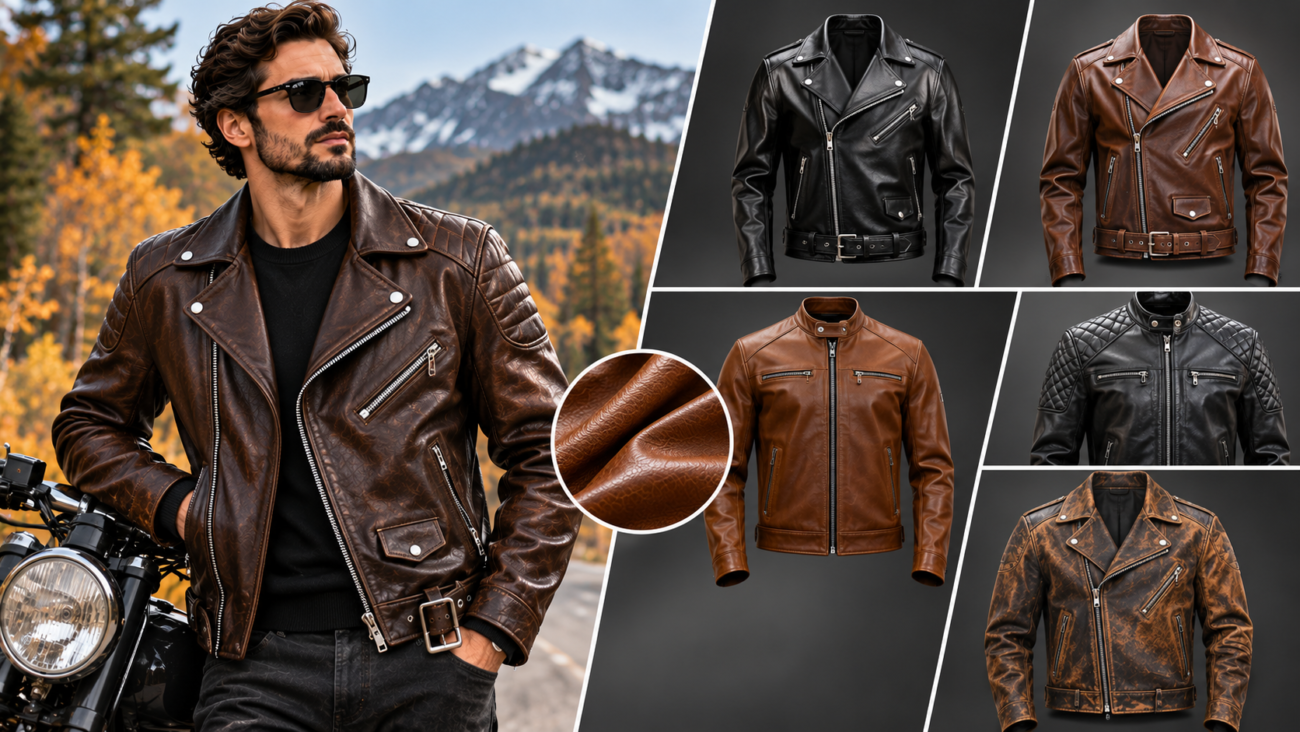
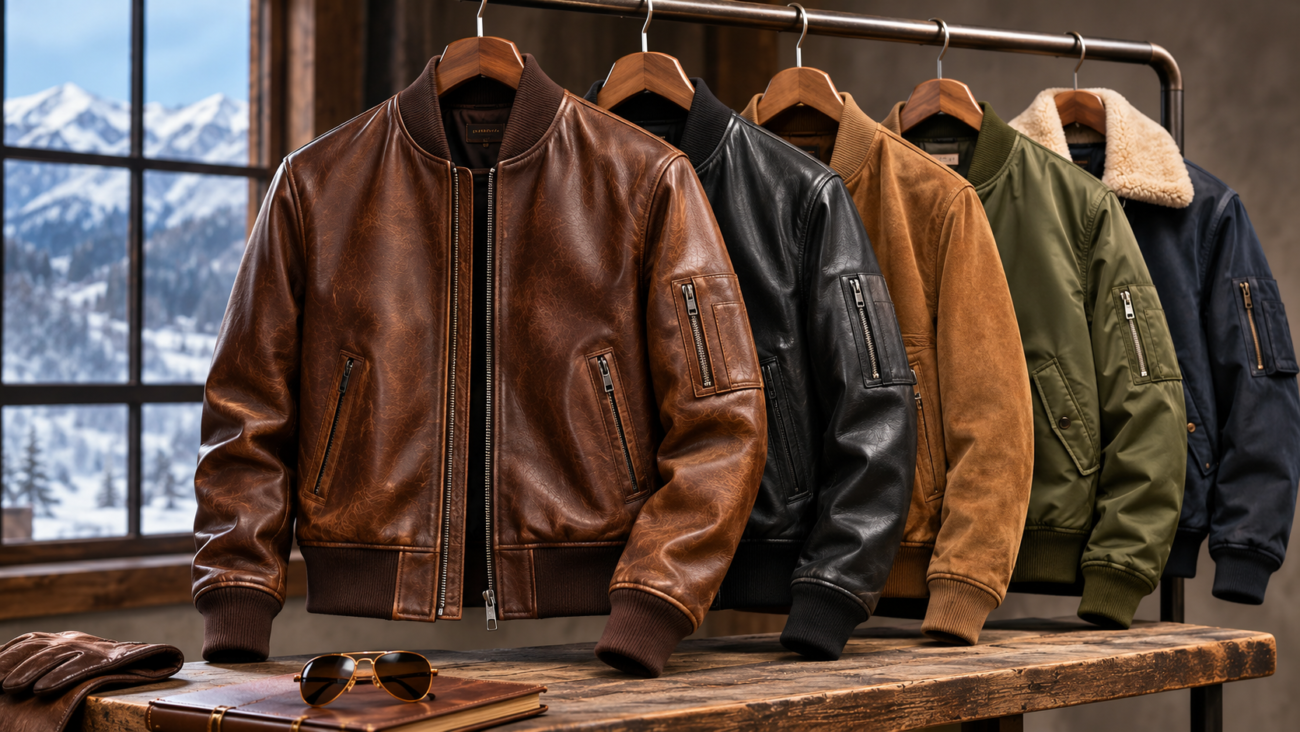
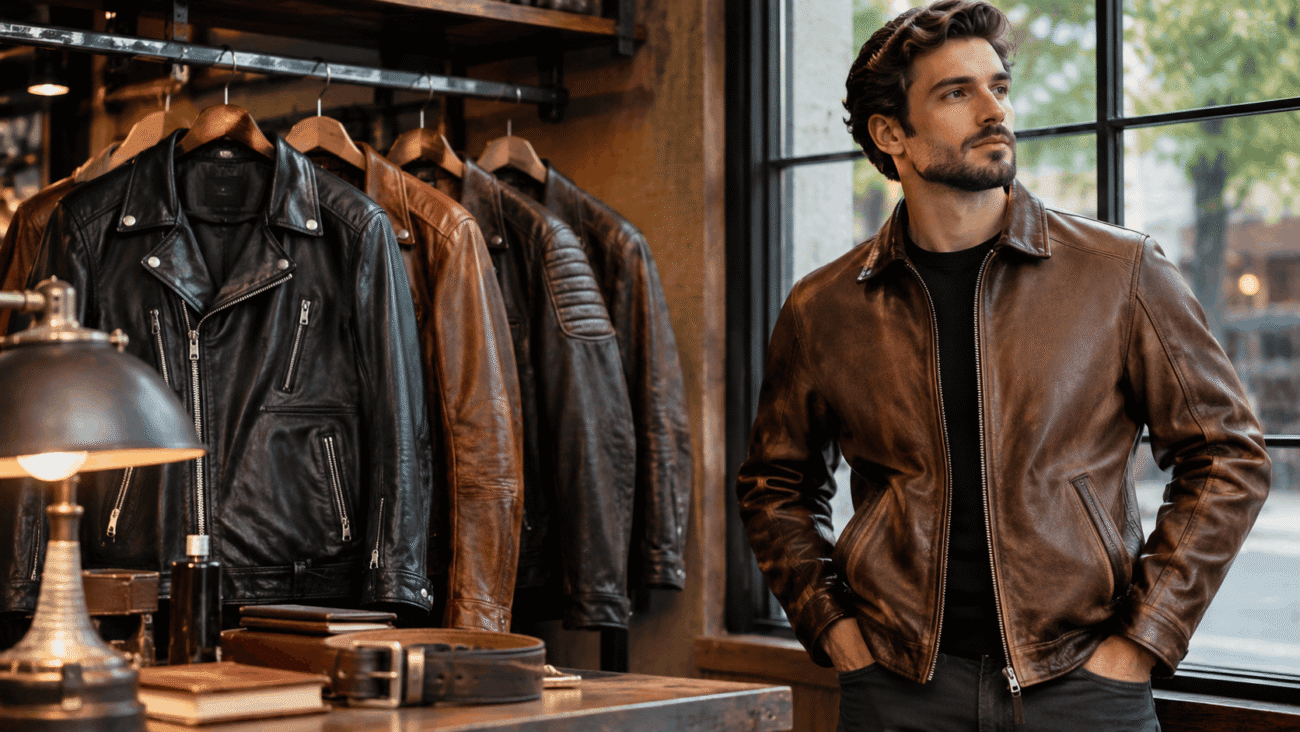
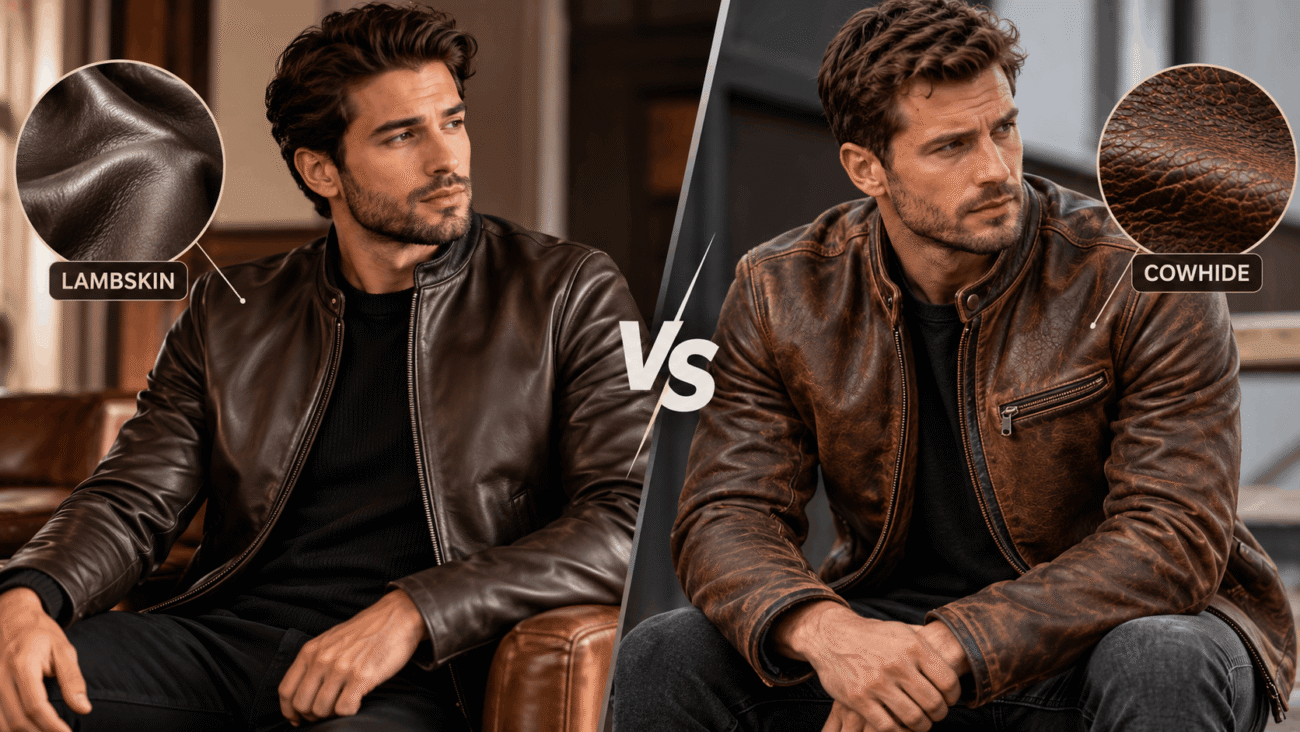
A leather jacket can look stylish in product photographs but fail to deliver the durability and comfort buyers expect. Many inexpensive jackets are manufactured using lower-grade leather, weak stitching, cheap hardware, and inadequate finishing. These compromises can affect how the jacket looks, feels, and performs over time.
While affordability matters, choosing a leather jacket based only on its price can lead to disappointing results. Understanding the differences in materials, construction, and manufacturing standards helps buyers identify quality products and make better purchasing decisions.
Why Do Cheap Leather Jackets Fail?
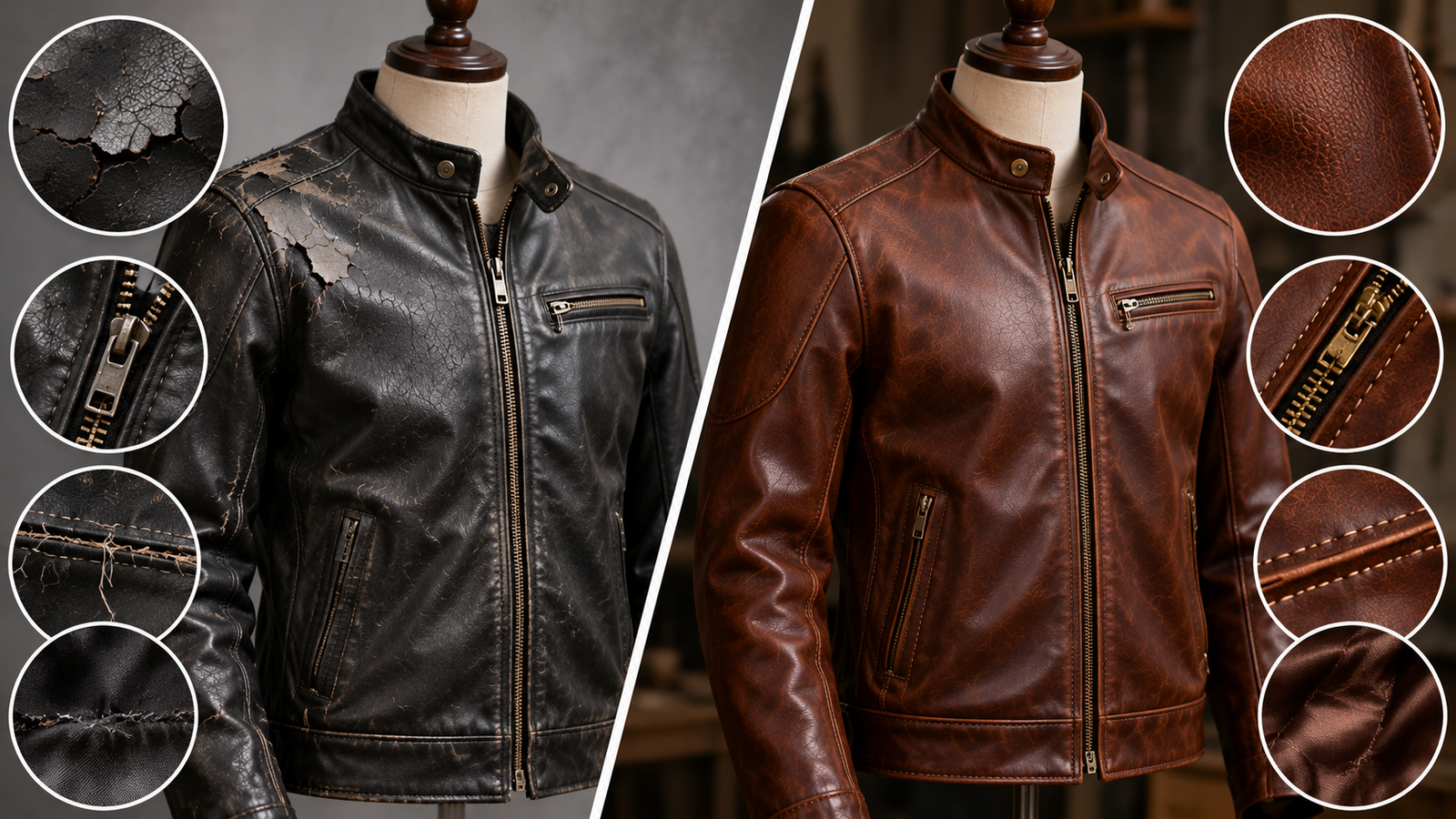
Cheap leather jackets often fail because of compromises in material selection, stitching, hardware, and manufacturing quality. Low-grade leather, weak seams, poor finishing, and inadequate quality control can reduce a jacket’s durability, comfort, and appearance. These problems may become noticeable after relatively little use, making an inexpensive purchase less valuable over time.
7 Common Reasons Cheap Leather Jackets Fail
1. Low-Quality Leather Materials
Leather quality is one of the most important factors determining a jacket’s durability and appearance. Some inexpensive jackets use lower-grade leather, heavily corrected surfaces, or materials with coatings that may not perform well with regular wear.
Common leather categories include:
Full-grain leather: Retains the natural grain surface and is valued for its durability and natural character.
Top-grain leather: Has a more uniform surface and is commonly used in premium leather garments.
Corrected-grain leather: Has a processed surface designed to create a more consistent appearance.
Bonded leather: Contains leather fibers combined with bonding materials and generally does not offer the same performance as quality solid leather.
Not every lower-priced jacket uses poor leather, but buyers should understand exactly what material they are purchasing. Leather grade, thickness, processing, and finishing all influence the final product’s performance.
2. Weak Stitching and Poor Construction
Even good leather cannot compensate for weak manufacturing. Poor stitching and inadequate construction can cause jackets to lose their shape or develop problems around high-stress areas.
Common construction issues include:
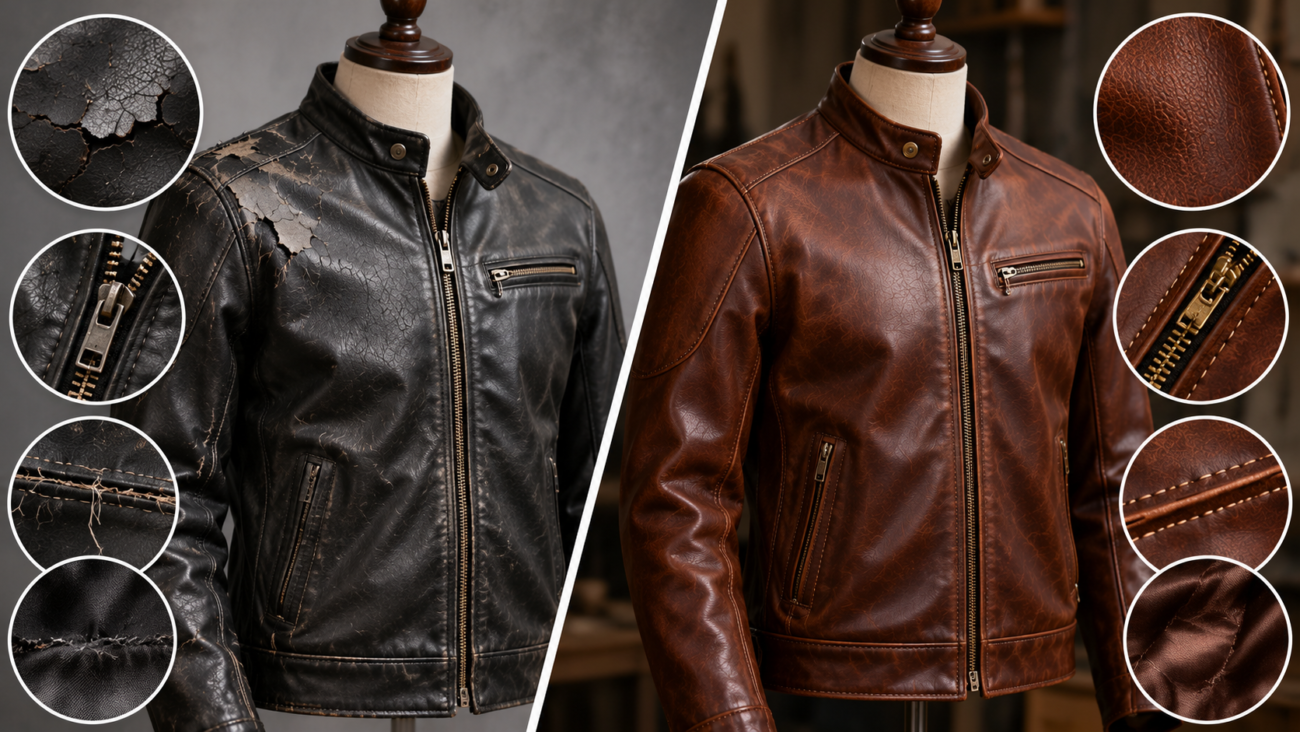
Uneven stitching and loose threads.
Weak seams around shoulders and sleeves.
Poorly attached pockets.
Insufficient reinforcement at stress points.
Inconsistent panel alignment.
These problems can affect the jacket’s structural integrity and appearance. Consistent stitching, properly finished seams, and reinforced construction are important signs of better manufacturing standards.
3. Cheap Zippers and Hardware
Zippers, buttons, snaps, and buckles may appear to be small details, but they significantly influence a leather jacket’s everyday usability.
Low-grade hardware can cause problems such as:
Zippers that frequently jam or separate.
Buttons and snaps that become loose.
Buckles that bend or break.
Metal components that corrode or lose their finish.
Quality hardware should operate smoothly and be securely attached to the jacket. Buyers should inspect these components rather than judging quality exclusively by the leather exterior.
4. Poor Leather Finishing
Leather finishing affects a jacket’s color, texture, appearance, and surface performance.
Poor finishing can result in uneven coloring, inconsistent texture, excessive surface coating, or premature deterioration. Some jackets may develop peeling, cracking, or fading when unsuitable coatings and finishing materials are used.
Proper finishing requires appropriate preparation, coloring, treatment, and quality checks.
A well-finished leather jacket should have a consistent appearance without obvious defects, although natural variations in genuine leather are normal.
5. Inadequate Lining and Interior Construction
The interior of a leather jacket is just as important as its exterior. Cheap jackets may use thin lining materials or poorly assembled interiors to reduce manufacturing costs.
Common problems include:
Thin or uncomfortable lining.
Loose interior stitching.
Poorly attached sleeve lining.
Uneven internal seams.
Inadequate insulation for the intended use.
These issues can affect comfort, fit, and overall wearability. A properly constructed lining should sit smoothly inside the jacket and remain securely attached during regular use.
6. Poor Fit and Inaccurate Sizing
A leather jacket can use good materials and still feel uncomfortable if its pattern development and sizing are inaccurate.
Poorly manufactured jackets may have:
Narrow or excessively wide shoulders.
Sleeves that are too long or short.
Tight armholes that restrict movement.
Incorrect body length.
Inconsistent sizing between products.
Proper pattern development and accurate measurements are essential for achieving a comfortable fit.
Before purchasing, compare the manufacturer’s size chart with your body measurements instead of relying only on standard labels such as Small, Medium, or Large.
7. Lack of Quality Control
Quality control helps manufacturers identify defects before products reach customers. Without proper inspection, jackets may leave the factory with inconsistent materials, weak stitching, or poorly installed components.
Important quality checks include:
Inspecting leather consistency and surface defects.
Checking stitching and seam strength.
Testing zippers and hardware.
Reviewing lining and interior construction.
Verifying measurements and overall finishing.
Manufacturers with systematic inspection procedures are better positioned to maintain consistent product quality across production batches.
Cheap vs. Quality Leather Jackets: What Is the Difference?
The differences between inexpensive and well-made leather jackets are often found in their materials, construction, and finishing rather than their overall appearance.
Quality Factor
Cheap Leather Jacket
Well-Made Leather Jacket
Leather material
May use lower-grade or heavily processed materials
Clearly specified leather with consistent quality
Stitching
May have uneven or weak seams
Consistent stitching and reinforced stress points
Hardware
Lower-grade components
Reliable zippers and hardware
Finishing
May show uneven color or surface defects
More consistent surface finishing
Lining
May use less durable materials
Properly fitted and finished lining
Construction
Potentially inconsistent workmanship
More controlled manufacturing
Quality control
May have inconsistent inspection
Systematic product inspection
The distinction is not simply about price. A manufacturer’s material selection, production techniques, and inspection standards determine how well a leather jacket is made.
How to Identify a Poor-Quality Leather Jacket Before Buying
Before purchasing a leather jacket, examine its materials and construction carefully.
Use this practical checklist:
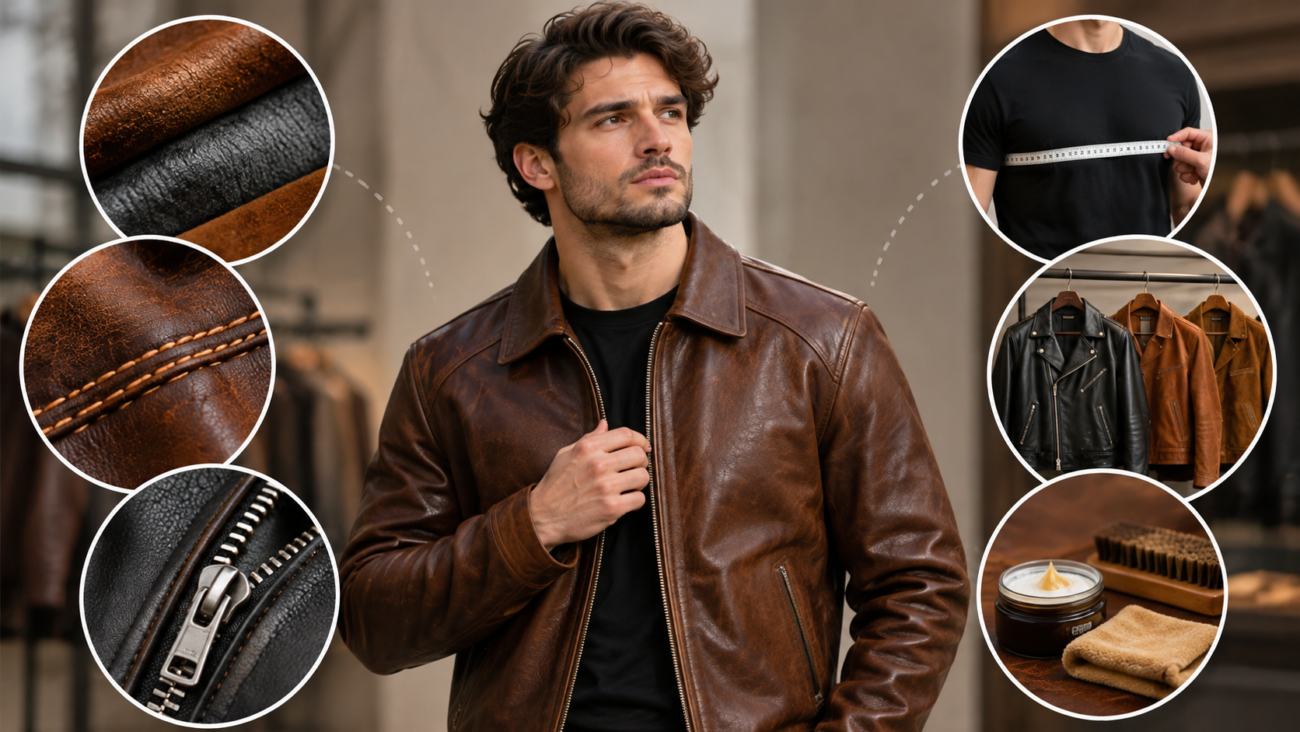
Check the leather type: Confirm whether the jacket uses full-grain, top-grain, corrected-grain, or another material.
Inspect stitching: Look around pockets, shoulders, sleeves, and major seams for loose threads or uneven construction.
Test the zipper: Check whether it moves smoothly and closes securely.
Examine hardware: Look for securely attached buttons, snaps, and other components.
Review the finishing: Check for unusual peeling, uneven coloring, or visible defects.
Inspect the lining: Make sure the interior is properly attached and comfortably finished.
Verify sizing: Compare the size chart with your measurements.
Review supplier information: Look for detailed product descriptions, clear photographs, and transparent material specifications.
These checks can help you avoid products that prioritize appearance over manufacturing quality.
Are Expensive Leather Jackets Always Better?
No. A higher price does not automatically guarantee better leather quality or manufacturing standards.
Some expensive jackets carry additional brand premiums, marketing expenses, and retail markups. Meanwhile, some manufacturers offer well-made leather jackets at competitive prices because they manage production and sourcing directly.
When comparing jackets, consider:
Actual leather type and grade.
Material thickness and consistency.
Stitching and construction quality.
Hardware and lining materials.
Manufacturing standards.
Brand positioning and retail markup.
The best purchasing decision comes from evaluating the product itself rather than assuming that a higher price always means better quality.
Frequently Asked Questions About Cheap Leather Jackets
Why do cheap leather jackets peel?
Cheap leather jackets may peel because of low-quality surface coatings, bonded materials, or synthetic finishes that deteriorate with regular use. Genuine leather itself does not typically peel in the same way as a failing surface coating, although it can crack, dry out, or suffer finish damage when poorly processed or maintained.
How long does a low-quality leather jacket last?
The lifespan of a low-quality leather jacket depends on its materials, construction, frequency of use, and maintenance. Jackets made with weak stitching, poor hardware, or unsuitable finishes may develop problems relatively quickly. A well-constructed jacket with appropriate care generally offers better long-term value.
Is genuine leather always better than synthetic leather?
Not necessarily. Genuine leather and synthetic leather have different characteristics, advantages, and maintenance requirements. Quality genuine leather can offer natural texture and long-term durability, while some synthetic materials provide consistent finishes and easier maintenance. The actual performance depends on material quality, construction, and intended use.
What are the signs of a poor-quality leather jacket?
Common signs include uneven stitching, loose threads, weak zippers, poorly attached lining, inconsistent surface finishing, and inaccurate sizing. Buyers should also check the leather description and manufacturing specifications. A jacket that looks attractive in photographs may still have construction problems that are difficult to identify without closer inspection.
Can a cheap leather jacket be durable?
Yes. An affordable leather jacket can still offer good durability if it uses suitable leather, reliable hardware, proper stitching, and consistent manufacturing. Price alone is not a reliable quality indicator. Buyers should compare actual materials and construction details before deciding whether a jacket offers good value.
Is buying a more expensive leather jacket worth it?
A more expensive leather jacket can be worth the investment when the additional cost reflects better materials, construction, hardware, and finishing. However, brand premiums do not always indicate superior quality. Compare product specifications and manufacturing standards to determine whether the higher price provides meaningful benefits.
Final Thoughts: Why Leather Jacket Quality Matters
A leather jacket’s durability depends on more than its appearance or price. Leather selection, stitching, hardware, finishing, lining, and manufacturing standards all contribute to its overall quality.
An inexpensive jacket may seem attractive initially, but poor materials and construction can lead to premature wear and additional replacement costs.
If you are exploring long-lasting jacket styles, read our guide to Genuine Leather vs Faux Leather to understand the differences between these materials. You can also discover why Leather Jackets Never and remain a popular choice across different fashion trends.
Ultimately, a good leather jacket should be evaluated by its materials, construction, comfort, and finishing rather than its price tag alone.