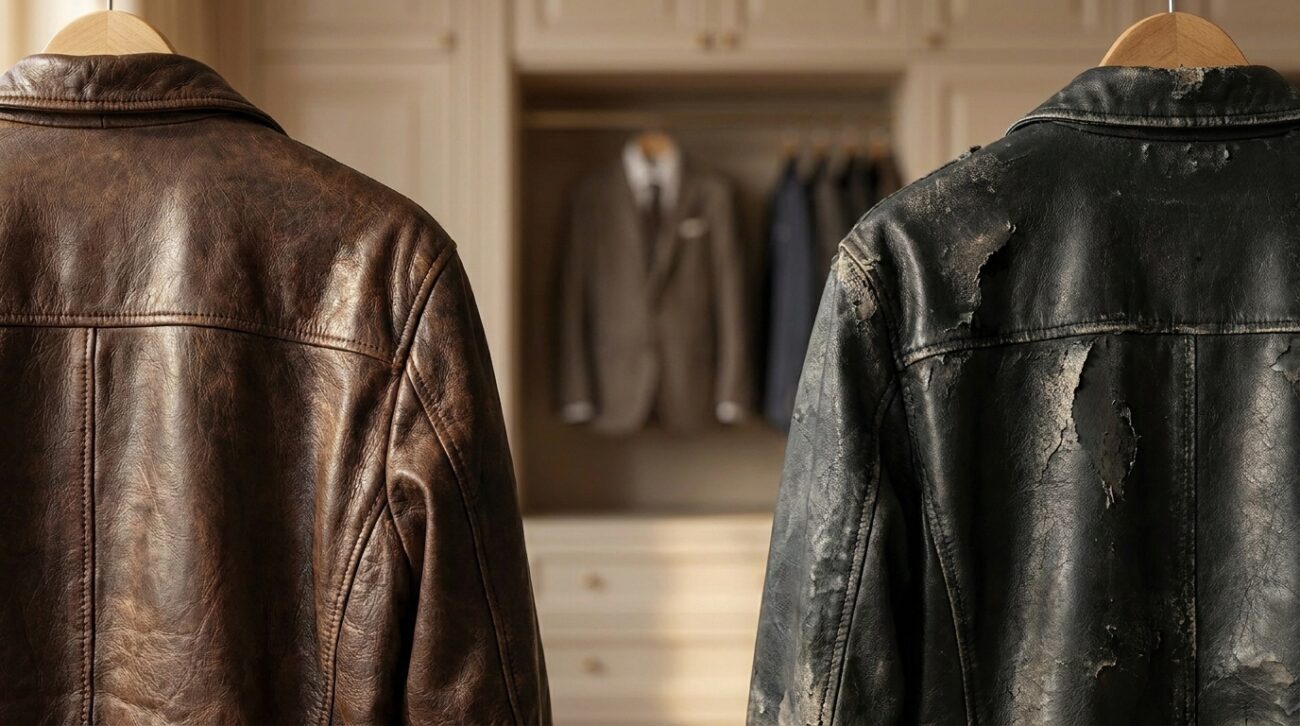
Buying a leather jacket is a decision that involves more than choosing a design or color. Genuine leather jackets are available at several price points, from affordable everyday options to premium designer pieces costing thousands of dollars. But how much should you actually spend on a good leather jacket?
A good genuine leather jacket typically costs between $200 and $500 for most everyday fashion buyers in the United States. Within this range, shoppers can find well-made jackets featuring genuine lambskin, cowhide or goatskin, comfortable linings, reliable hardware and thoughtful construction. Premium and heritage jackets can cost $500 to $1,500 or more, depending on their materials, craftsmanship and brand positioning.
However, a higher price does not automatically mean better quality. The actual value of a leather jacket depends on its leather grade, hide selection, construction, stitching, lining, hardware and fit.
Understanding these factors can help you avoid overpaying for a brand name or purchasing a cheap jacket that fails to deliver the durability and comfort you expect.
In this guide, we break down leather jacket costs, explain what you should expect at different price points, and share practical ways to identify a jacket worth buying.
How Much Does a Good Leather Jacket Cost?
A good leather jacket generally costs $200 to $500 in the US market. Entry-level genuine leather options may be available for less, while premium handcrafted, heritage and designer jackets can exceed $1,000.
The right budget depends on how frequently you plan to wear the jacket, the type of leather you prefer and the construction quality you expect.
Here is a practical breakdown of leather jacket prices:
Price range
What to expect
Best suited for
Under $150
Budget materials, basic construction and potentially synthetic or bonded leather
Occasional fashion wear
150–300
Entry-level genuine leather, simpler designs and functional hardware
Budget-conscious buyers
300–500
Better material selection, refined construction and improved finishing
Everyday use and long-term value
500–800
Premium leather selections, detailed craftsmanship and higher-end finishing
Quality-focused shoppers
800–1,500
Heritage brands, specialist makers and premium construction
Enthusiasts and collectors
$1,500+
Luxury labels, bespoke work and specialist designs
Luxury buyers
These ranges are general shopping benchmarks, not guaranteed material specifications. Individual products can fall outside them, and two jackets at the same price can offer very different levels of quality.
For most shoppers, the 250–500 range is a sensible place to begin comparing genuine leather jackets.
What Can You Expect From a Leather Jacket at Different Price Points?
Understanding what you receive at each price level is more useful than choosing a budget based on appearance alone.
Some products in this category use faux leather, bonded leather or lower-grade genuine leather. Others may be discounted genuine leather products, so the price alone cannot establish the material’s authenticity.
At this level, you may encounter:
Basic leather or synthetic materials.
Simpler stitching and construction.
Standard polyester linings.
Basic zippers and buttons.
Limited design and finishing details.
A lower-priced jacket may be suitable if you want an inexpensive fashion piece. However, buyers seeking a long-term genuine leather jacket should carefully examine the product specifications.
Buying advice: Never assume a jacket is genuine leather simply because its product title includes the word leather. Check the material description and ask the seller for clarification.
2. Leather Jackets Between $150 and $300
This is an interesting price category for shoppers looking for affordable genuine leather jackets.
Depending on the manufacturer and product specifications, you can find lambskin, cowhide, goatskin and suede jackets in this range.
At this price point, look for:
Clearly identified leather material.
Consistent stitching and properly finished seams.
Comfortable interior lining.
Functional metal zippers and secure closures.
A well-structured design.
Accurate sizing information.
You may not receive the same level of detailing as a premium heritage jacket, but a carefully selected jacket can offer excellent value.
For buyers with a budget below $300, material transparency and construction should be more important than decorative features or branding.
The 300–500 category is a practical target for shoppers who want a quality leather jacket without entering luxury pricing.
At this level, buyers should compare leather quality, garment construction, lining, hardware and overall fit rather than assuming that every product offers the same specifications.
Depending on the manufacturer, you may find:
Quality top-grain or full-grain leather.
Carefully selected lambskin or cowhide.
More refined stitching and seam finishing.
Better-quality interior materials.
More detailed jacket patterns and construction.
Improved attention to fit and finishing.
This price range is particularly relevant for people who plan to wear their jackets regularly.
A classic leather biker jacket, bomber jacket or minimalist leather jacket can provide long-term wardrobe value when its materials and construction are appropriate for its intended use.
Buying advice: Compare at least three jackets in this range. Examine their material specifications, lining, construction and return policies before deciding.
4. Leather Jackets Between $500 and $800
At 500–800, shoppers can begin exploring more premium leather outerwear.
Products in this category may feature carefully selected hides, refined patterns, better interior construction and more detailed finishing.
Potential features include:
Premium full-grain or top-grain leather.
More specialized leather finishes.
Higher-quality lining materials.
Detailed panel construction.
Refined stitching and hardware.
More attention to garment fit.
However, these features should be verified rather than assumed.
A jacket priced at $700 does not necessarily contain better leather than one priced at $400. The difference may come from the manufacturer, retail markup, design complexity or brand positioning.
Buying advice: At this price point, ask what specifically justifies the additional cost. Look for measurable improvements in materials, construction, fit or craftsmanship.
5. Leather Jackets Between $800 and $1,500
This category generally includes premium leather brands, heritage manufacturers and specialist outerwear makers.
The additional price may reflect:
Specialized leather sourcing.
More complex garment construction.
Heritage manufacturing processes.
Premium finishing and detailing.
Specialist designs or limited production.
Higher retail and brand positioning costs.
Some jackets in this range offer exceptional material and construction quality. Others command a premium primarily because of their brand identity.
For buyers who appreciate heritage designs, distinctive leather characteristics or specialist craftsmanship, this category may be worth exploring.
6. Luxury Leather Jackets Above $1,500
Luxury leather jackets can cost several thousand dollars.
At this level, buyers may be paying for designer branding, exclusive designs, specialist materials, limited production and premium retail positioning.
Some luxury products offer outstanding craftsmanship, but the price difference does not necessarily translate into proportionally greater durability or comfort.
If your primary objective is to purchase a dependable everyday leather jacket, spending several thousand dollars is not essential.
A well-constructed jacket at a considerably lower price may satisfy your needs just as effectively.
What Determines the Cost of a Leather Jacket?
Two jackets can both be described as genuine leather and still have significantly different prices.
The reason is that leather jacket manufacturing involves several material and production decisions. Understanding these factors helps explain where your money goes.
1. Leather Quality and Grade
Leather quality is one of the most important factors affecting jacket pricing.
Different leather grades have different characteristics, surface treatments and manufacturing requirements.
Full-grain leather
Full-grain leather retains the natural grain surface of the hide. It is valued for its natural appearance and ability to develop character through use.
Because the natural surface remains visible, it may contain individual markings and variations.
Top-grain leather
Top-grain leather comes from the outer portion of the hide but has undergone surface processing to create a more uniform appearance.
It can offer a balance of durability, flexibility and refined aesthetics, making it a popular material for leather jackets.
Genuine leather
Genuine leather is a broad commercial description rather than a guarantee of premium quality.
It can refer to real leather products made from different layers and grades of hide. Therefore, buyers should request more detailed material information instead of relying on this label alone.
The important distinction is that genuine leather does not automatically mean full-grain leather.
2. Type of Leather Used
The animal hide and leather finish also influence the jacket’s price.
Different materials offer different combinations of softness, weight, texture and durability.
Lambskin leather
Lambskin is known for its soft, supple texture and lightweight feel. It is commonly used in fashionable biker jackets, fitted jackets and premium casual outerwear.
Its softness and refined appearance make it attractive to buyers who prioritize comfort and aesthetics.
Cowhide leather
Cowhide is generally thicker and more substantial than lambskin. It is valued for its strength and resistance to everyday abrasion.
It is commonly used in structured jackets, rugged outerwear and traditional biker styles.
Goatskin leather
Goatskin typically features a distinctive grain texture and a useful balance of flexibility and strength.
It can be a suitable option for shoppers who want a leather jacket that combines a relatively supple feel with everyday practicality.
Suede leather
Suede has a soft, napped surface that creates a distinctive matte appearance.
It is popular for bomber jackets, casual outerwear and refined everyday styles. Its surface generally requires more careful protection from moisture and staining.
The price of each material varies according to hide quality, thickness, finishing and manufacturing requirements. No animal hide is automatically the most expensive in every grade or product category.
Leather thickness can influence a jacket’s structure, weight, feel and intended application.
Thicker leather is often associated with more substantial jackets, particularly traditional motorcycle and rugged outerwear styles.
Thinner leather can provide greater flexibility and a lighter wearing experience, which may be preferable for fashionable jackets.
However, thicker leather is not automatically better.
The appropriate thickness depends on the jacket’s design, leather type, intended use and construction.
A lightweight lambskin bomber jacket and a heavyweight cowhide motorcycle jacket serve different purposes. Comparing them exclusively by thickness would not provide a meaningful assessment of quality.
4. Stitching and Construction
Leather quality alone cannot make a jacket exceptional.
The way the garment is cut, assembled and finished also influences its performance and appearance.
Important construction details include:
Straight and consistent stitching.
Reinforced seams where needed.
Properly aligned leather panels.
Cleanly finished edges.
Secure pockets and closures.
Consistent stitching around sleeves and shoulders.
Poor construction can compromise even a jacket made from expensive leather.
Buyers should examine close-up product photographs and look for evidence of careful assembly.
5. Lining and Interior Materials
The interior of a leather jacket affects comfort, movement and seasonal suitability.
Common lining materials include polyester, satin, viscose and cotton blends.
Some jackets also include quilted insulation or shearling interiors for additional warmth.
A well-designed lining should sit smoothly, allow comfortable movement and remain securely attached during regular use.
Shearling jackets generally cost more because they incorporate additional material and more complex construction.
The best lining depends on how and when you intend to wear the jacket.
6. Zippers, Buttons and Hardware
Hardware may appear to be a small detail, but it affects the everyday usability of a leather jacket.
Consider:
Main front zippers.
Sleeve zippers.
Metal snaps and buttons.
Buckles and adjustment straps.
Pocket closures.
Decorative hardware.
Smooth-operating zippers, secure fastenings and properly installed components contribute to a better overall garment.
A premium-looking jacket with unreliable hardware can quickly become frustrating to wear.
7. Design Complexity and Craftsmanship
A simple leather jacket usually requires fewer design components than a jacket featuring multiple panels, quilting, decorative stitching, belts, additional pockets or specialized collars.
More complex designs may require additional pattern development, cutting, sewing and finishing work.
Custom sizing and made-to-measure production can also increase the final cost because they involve more individual attention and production work.
This is one reason why two jackets made from similar leather can have different retail prices.
8. Brand Name and Retail Markup
The brand behind a jacket can influence its price considerably.
Established luxury brands often incorporate marketing, retail operations, distribution, brand recognition and designer positioning into their pricing.
Direct-to-consumer manufacturers may operate with a different commercial structure by controlling more of the production and selling process.
However, buying directly from a manufacturer does not automatically guarantee better quality or lower prices.
Buyers should still evaluate the actual materials, specifications, construction and customer policies.
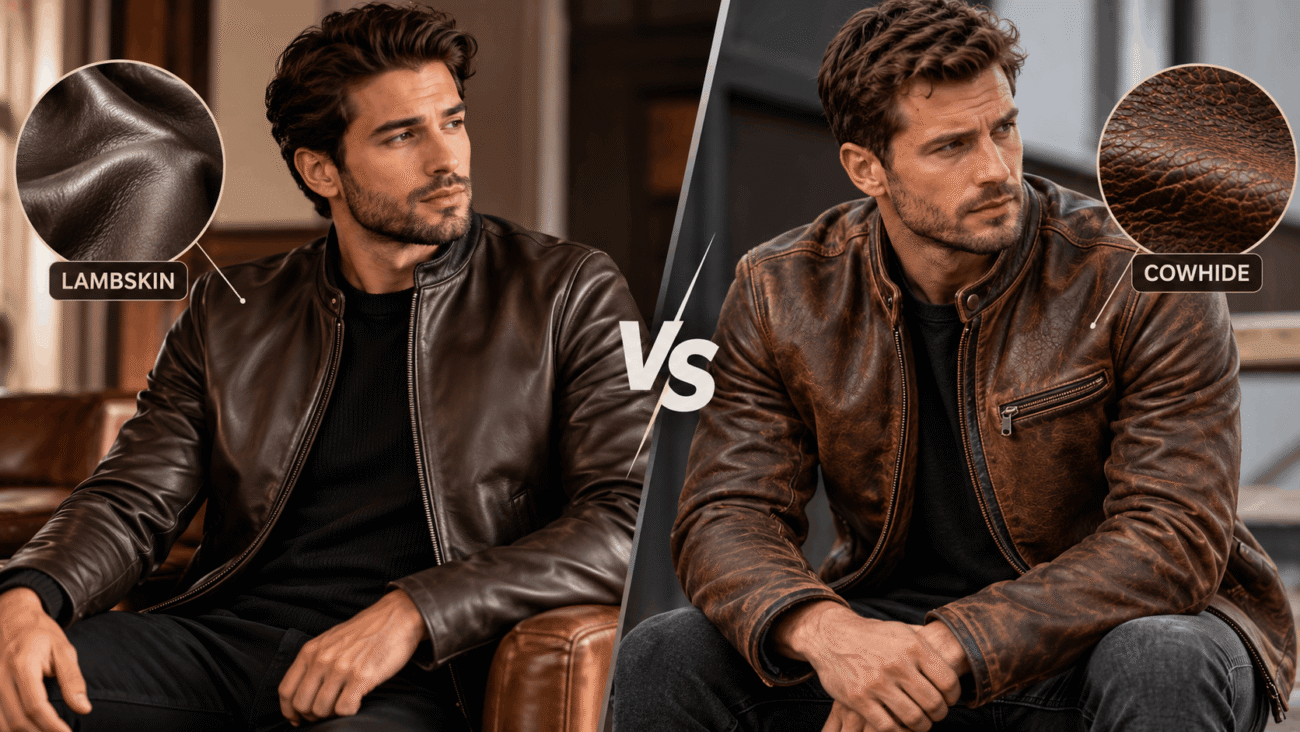
Does Lambskin or Cowhide Affect Leather Jackets Cost More?
Yes, leather type can influence the price, but the difference depends on the hide’s quality, grade, thickness, finish and availability.
Lambskin is often selected for its softness and refined texture, while cowhide is commonly chosen for its strength and substantial feel.
Here is a practical comparison:
Feature
Lambskin
Cowhide
Texture
Smooth and supple
More substantial grain
Weight
Generally lighter
Generally heavier
Comfort
Soft from the beginning
May feel firmer initially
Abrasion resistance
Generally more delicate
Generally more resistant
Appearance
Refined and elegant
Rugged and structured
Common styles
Fashion and fitted jackets
Biker and rugged jackets
Price
Can be premium
Available across broad price ranges
Neither material is universally better.
If softness and lightweight comfort are your priorities, lambskin may justify its price. If you prefer a more substantial jacket for frequent wear, cowhide may be a better choice.
The leather’s actual grade and construction remain important in both cases.
Is a $300 Leather Jacket Worth Buying?
Yes. A $300 leather jacket can be a worthwhile purchase if it uses properly identified genuine leather and has sound construction, a comfortable lining, reliable hardware and an appropriate fit.
In fact, shoppers do not necessarily need to spend $800 or $1,000 to find a good everyday leather jacket.
At approximately $300, consider checking the following:
Is the outer material clearly identified?
Does the seller specify the leather type?
Are the stitching and seams consistent?
Is the lining comfortable and properly finished?
Do the zippers and buttons operate smoothly?
Does the jacket fit correctly?
Are the return and exchange policies clearly explained?
If these requirements are satisfied, a $300 jacket may offer better value than a more expensive product with limited material information.
The key is to evaluate the actual garment rather than treating price as a quality guarantee.
Is an Expensive Leather Jacket Always Better?
No. An expensive leather jacket is not automatically superior to a more affordable one.
A higher price can reflect genuine improvements in leather quality, construction, finishing and design. However, it can also reflect branding, retail margins, marketing and exclusivity.
For example, consider two hypothetical jackets:
Jacket A – $350
Clearly identified top-grain leather.
Consistent stitching.
Comfortable lining.
Reliable hardware.
Good fit and finishing.
Jacket B – $850
Unclear leather-grade specifications.
Similar basic construction.
Standard lining.
Premium brand positioning.
In this comparison, Jacket A may offer better value despite its lower price.
The lesson is simple: compare the materials and workmanship before comparing brand names.
Does Buying Directly From a Manufacturer Reduce Leather Jacket Cost?
Buying directly from a manufacturer can sometimes provide better value because it may reduce the number of intermediaries involved in the sales process.
Traditional retail distribution can involve several stages:
Each stage may introduce additional commercial costs.
A direct-to-consumer model can simplify this process:
Manufacturer → Customer.
However, the final price still depends on production costs, material sourcing, shipping, marketing, quality control and other operating expenses.
Direct manufacturing is not a substitute for quality verification.
Before purchasing, check whether the brand provides clear product specifications, transparent pricing, reliable customer support and accessible return policies.
At The Crown Leather, the website describes its production approach as factory-direct craftsmanship and custom-made leather jackets, with production in Pakistan. Its listed jacket prices also demonstrate that genuine leather outerwear can be available below traditional luxury price levels.
How to Calculate the Long-Term Value of a Leather Jacket
One useful way to evaluate a leather jacket is to calculate its cost per wear.
Cost per wear measures how much you spend each time you use a product.
The formula is:
CostPerWear=PurchasePriceTotalNumberofWears
For example, imagine purchasing a $400 leather jacket and wearing it 50 times annually for five years.
That gives you 250 total wears.
[ $400 div 250 = $1.60 ]
This does not mean every $400 jacket will last five years. Actual longevity depends on leather quality, construction, frequency of use, storage and maintenance.
Nevertheless, the calculation helps explain why a well-made jacket can represent reasonable long-term value when worn regularly.
How to Choose a Good Leather Jacket Without Overpaying
A sensible buying decision starts with understanding your needs rather than choosing the most expensive product.
1. Decide How You Will Use It
Think about your primary purpose.
Everyday wear: Consider classic bomber or casual leather jackets.
Fashion and styling: Explore lambskin, suede and fitted designs.
Cold-weather use: Consider insulated designs or shearling options.
Your intended use should determine the material and construction requirements.
2. Compare Leather Specifications
Do not settle for a product description that only says genuine leather.
Look for more specific information, including:
Animal hide.
Leather grade, where disclosed.
Leather finish.
Thickness, where available.
Lining material.
Closure and hardware details.
If this information is unavailable, ask the seller before purchasing.
3. Check the Fit Carefully
Fit is one of the most important parts of buying a leather jacket.
The shoulders should sit naturally, the sleeves should reach an appropriate length, and the jacket should allow comfortable movement.
It should feel close to the body without restricting movement.
If you intend to wear sweaters underneath, account for additional layering when choosing your size.
Leather jackets can be difficult to alter compared with many fabric garments, so reviewing the size chart is essential.
4. Examine Product Images and Details
Product photographs should help you understand the garment beyond its overall appearance.
Look for:
Close-up leather texture.
Front and back views.
Interior lining photographs.
Sleeve and cuff details.
Zipper and pocket construction.
Stitching and panel finishing.
Do not rely entirely on heavily edited promotional photographs.
5. Check Customer and Return Policies
Before placing an order, review shipping information, estimated delivery times, return eligibility, exchange conditions and warranty coverage.
For online purchases, clear sizing and return information can be particularly important.
Why The Crown Leather Is Worth Exploring
Finding a good leather jacket is not necessarily about spending the highest amount. It is about choosing a design, material and construction quality that match your expectations.
The Crown Leather offers leather outerwear for men and women, including biker jackets, bomber jackets, suede jackets, varsity jackets, leather blazers and shearling styles.
The brand’s website highlights factory-direct production, custom-made leather jackets and craftsmanship in Pakistan.
Its currently displayed jacket listings include several examples priced around 209–339, depending on the style. These are listed product prices, not a guarantee that every jacket uses the same leather grade or specifications.
For shoppers seeking genuine leather outerwear without automatically entering luxury price territory, comparing these options against your material and construction requirements can be a useful starting point.
Common Mistakes to Avoid When Buying a Leather Jacket
Even experienced shoppers can make mistakes when comparing leather jacket prices.
Here are some common issues to watch out for.
1. Choosing a jacket based only on price
A low price may look attractive, but it does not establish material authenticity or construction quality.
2. Assuming all genuine leather is the same
Different grades and leather finishes have different characteristics. Always check the material specifications.
3. Paying extra for branding without checking quality
A recognizable brand name does not automatically justify a higher price.
4. Ignoring the lining and hardware
These components affect comfort and everyday usability. They deserve attention alongside the outer leather.
5. Buying the wrong size
A premium leather jacket with an uncomfortable fit is unlikely to become a regular part of your wardrobe.
6. Expecting every leather jacket to have the same durability
Lambskin, suede and heavyweight cowhide have different characteristics and require different levels of care.
7. Ignoring maintenance requirements
Leather needs appropriate cleaning, conditioning when suitable and proper storage. Neglecting maintenance can reduce its useful life.
Final Verdict: How Much Should You Spend on a Good Leather Jacket?
For most shoppers in the United States, spending approximately 250–500 is a sensible starting point for a good everyday genuine leather jacket.
This range offers opportunities to find quality materials, comfortable linings, dependable hardware and thoughtful construction without automatically paying luxury-brand prices.
However, your ideal budget depends on your requirements. A lightweight lambskin jacket, a rugged cowhide biker jacket and a premium shearling coat have different material and production costs.
Rather than choosing a jacket based on its price tag, evaluate the leather, construction, stitching, lining, hardware and fit.
A good leather jacket should deliver the right balance of comfort, appearance, quality and value.
Explore The Crown Leather to compare men’s and women’s leather jackets and find a style that matches your preferences and budget.
Frequently Asked Questions
1. How much should a good leather jacket cost?
A good genuine leather jacket typically costs between $200 and $500 for everyday fashion use in the United States. Premium jackets can cost 500–1,500 or more, depending on leather quality, craftsmanship, construction and brand positioning.
2. Is $200 enough for a real leather jacket?
Yes. You can find genuine leather jackets around $200, particularly through direct-to-consumer brands. However, check the leather type, grade, stitching, lining and hardware before purchasing.
3. Is a $300 leather jacket good quality?
A $300 leather jacket can offer good quality if it uses properly identified leather and has reliable construction, comfortable lining, functional hardware and a suitable fit. Price alone does not establish quality.
4. Why are some leather jackets so expensive?
Leather jacket prices depend on hide quality, leather grade, tanning and finishing, garment construction, lining, hardware, design complexity, craftsmanship and brand positioning. Luxury brands may also charge more for exclusivity and brand recognition.
5. Which leather is best for a quality leather jacket?
Lambskin is popular for softness and lightweight comfort, while cowhide is valued for strength and abrasion resistance. Goatskin offers a balance of flexibility and strength, while suede provides a distinctive soft, matte texture. The best option depends on your intended use.
6. Is full-grain leather worth the extra cost?
Full-grain leather can be worth the additional cost if you value its natural grain, appearance and potential to develop character over time. However, top-grain leather can also make an excellent jacket. Construction and fit remain important.
7. How long should a good leather jacket last?
There is no guaranteed lifespan for every leather jacket. Longevity depends on leather quality, construction, frequency of use, storage and maintenance. A well-made jacket that receives appropriate care can provide many years of use.
8. Are leather jackets under $300 worth buying?
Yes. Some jackets under $300 offer good value, particularly when their leather specifications and construction are clearly documented. Compare the actual materials and workmanship instead of assuming that a lower price means poor quality.