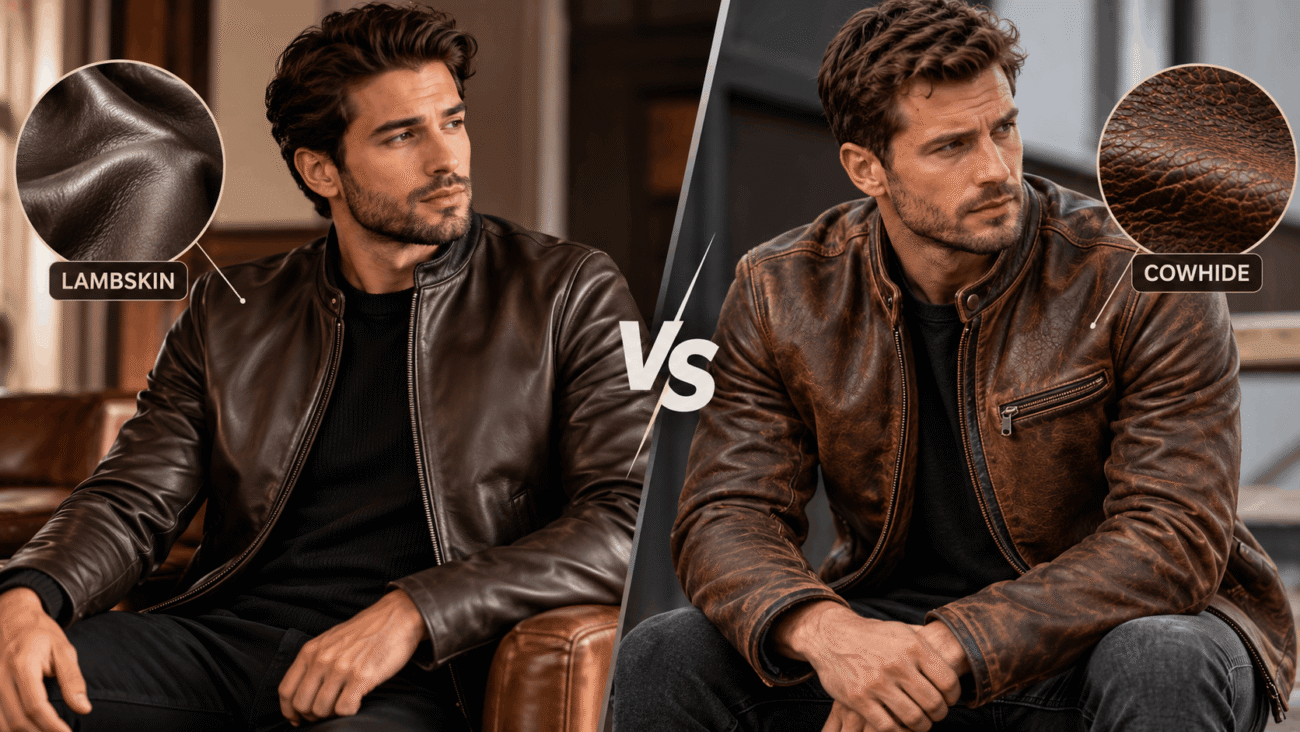
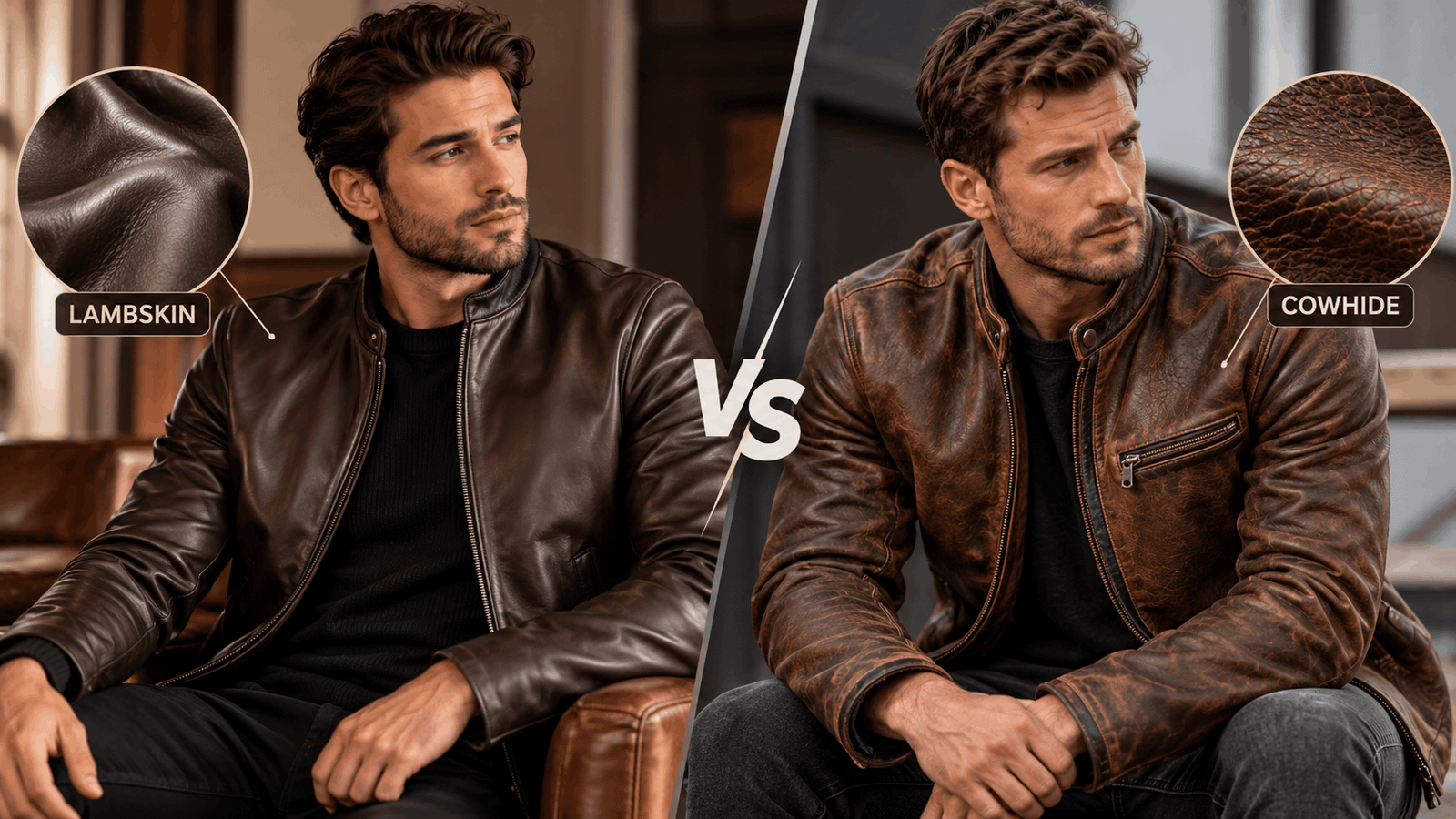
Choosing between lambskin and cowhide leather jackets depends on what matters most to you: softness, durability, comfort, appearance, or long-term value. Both are popular materials for genuine leather jackets, but they offer different wearing experiences.
Lambskin leather jackets are generally better for softness, lightweight comfort, and a smooth, luxurious appearance. Cowhide leather jackets are usually better for durability, abrasion resistance, and rugged everyday use. The best option depends on your lifestyle, budget, preferred jacket style, and how frequently you plan to wear it.
In this guide, we compare lambskin vs cowhide leather jackets in terms of durability, comfort, weight, price, maintenance, and style to help you make an informed buying decision.
Lambskin vs Cowhide Leather Jackets: Key Differences at a Glance
| Feature | Lambskin Leather | Cowhide Leather |
| Softness | Very soft and supple | Generally firmer |
| Weight | Usually lightweight | Often heavier |
| Texture | Smooth and fine-grained | More pronounced natural grain |
| Durability | Good with proper care | Generally more abrasion-resistant |
| Comfort | Excellent for everyday fashion | Excellent for structured, rugged designs |
| Flexibility | Highly flexible | Depends on thickness and finishing |
| Price | Often more expensive for comparable premium quality | Available across a broad price range |
| Maintenance | Requires careful handling | Generally more forgiving of regular wear |
| Best for | Fashion, smart-casual outfits, lightweight jackets | Frequent wear, rugged styles, and structured jackets |
Quick verdict: Choose lambskin for softness and refined style. Choose cowhide for toughness and frequent use. Leather quality, thickness, tanning, construction, and stitching can influence performance just as much as the animal hide itself.
What Is Lambskin Leather?
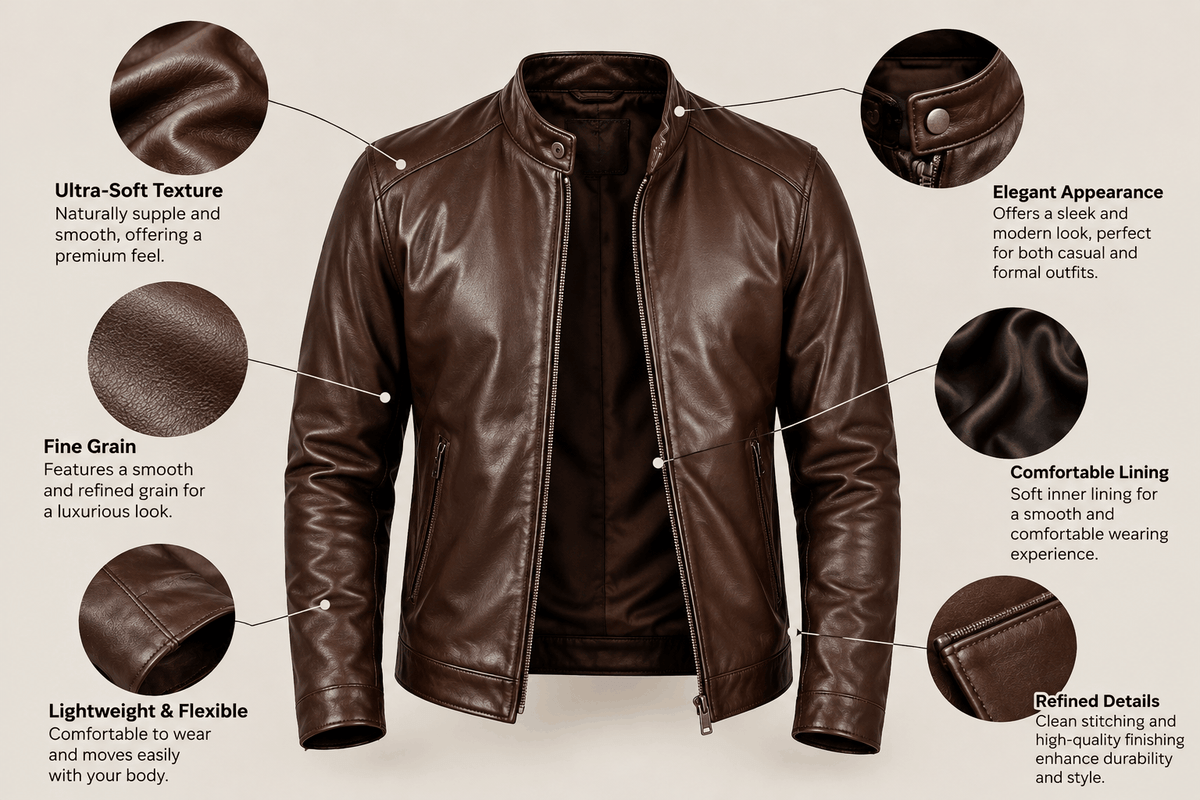
Lambskin leather comes from the hide of a young sheep. It is valued in fashion because it typically has a soft texture, a fine grain, and a supple feel.
These characteristics make lambskin a popular choice for premium leather jackets, fitted silhouettes, lightweight outerwear, and designs that prioritize comfort and appearance.
Benefits of Lambskin Leather Jackets
1. Exceptional softness
Lambskin is naturally supple and comfortable against the body. It often feels softer from the first wear than a comparable jacket made from thicker cowhide.
2. Lightweight comfort
Many lambskin jackets are lighter than jackets made from heavy cowhide. This makes them suitable for everyday outfits, travel, and mild weather, depending on the lining and overall construction.
3. Refined appearance
Lambskin commonly features a fine, smooth grain that creates an elegant finish. It works particularly well for minimalist jackets, leather blazers, fitted biker jackets, and contemporary fashion designs.
4. Flexible movement
Its natural suppleness allows the material to move easily with the body. This can make a well-fitted lambskin jacket comfortable for walking, commuting, and casual activities.
Disadvantages of Lambskin Leather
Lambskin’s softness comes with trade-offs.
- It can be more susceptible to scratches, scuffs, and surface damage than comparable, heavier cowhide.
- Thin lambskin may stretch or lose its shape if poorly fitted or improperly stored.
- It requires careful handling around sharp objects, rough surfaces, and excessive moisture.
- Premium lambskin jackets can command higher prices, although pricing varies by quality and construction.
Best suited for: People who prioritize softness, lightweight comfort, elegant styling, and a premium fashion appearance.
What Is Cowhide Leather?
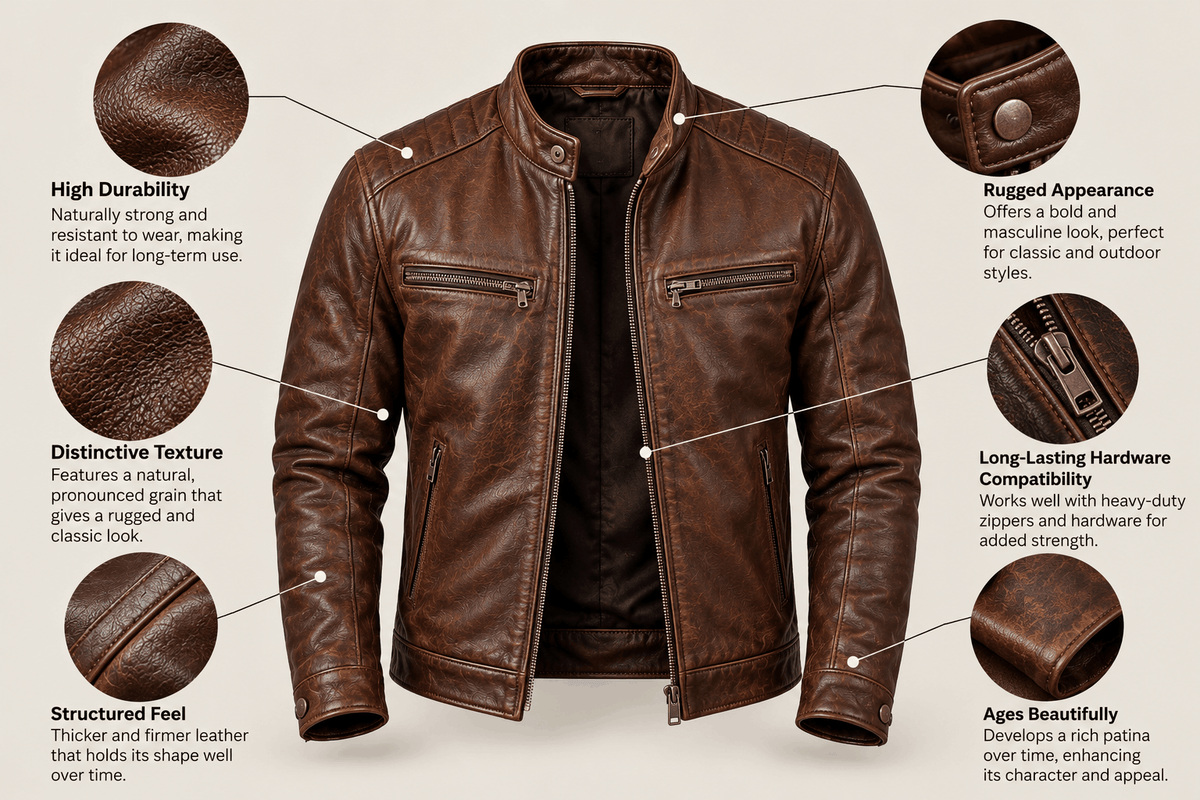
Cowhide leather comes from cattle hides and is widely used in jackets, boots, belts, furniture, and other products that require a durable leather material.
Its properties vary according to the hide’s grade, thickness, tanning process, and finish. However, cowhide is generally known for its strength, substantial feel, and resistance to everyday abrasion.
Benefits of Cowhide Leather Jackets
1. Greater resistance to everyday wear
Cowhide is generally a strong, durable material. A well-made cowhide jacket can withstand regular use, friction, and handling better than a similarly constructed jacket made from more delicate leather.
2. Structured appearance
Cowhide often has a firmer feel, helping a jacket maintain a defined silhouette. This is useful for classic biker jackets, motorcycle-inspired designs, and rugged outerwear.
3. Long-term practicality
For people who wear their jackets frequently, cowhide can be a practical choice. Its durability may make it particularly suitable for jackets intended to be worn for years.
4. Distinctive natural character
Cowhide can feature visible grain patterns, natural markings, and a substantial texture. Depending on the finish, it can develop an attractive patina as it ages.
Disadvantages of Cowhide Leather
Cowhide also has limitations.
- Thicker cowhide jackets can feel heavier than lambskin alternatives.
- Firmer leather may require a break-in period before it feels fully comfortable.
- Some styles can feel restrictive if the leather is thick or the fit is too tight.
- Its initial stiffness may not suit people looking for a soft, lightweight fashion jacket.
Best suited for: Buyers who prioritize durability, structured styling, frequent wear, and a rugged leather appearance.
Lambskin vs Cowhide: Which Leather Is More Durable?
Cowhide generally has the advantage when comparing abrasion resistance and toughness between similar-quality jackets. Its thicker and firmer structure often makes it more suitable for regular wear in demanding conditions.
Lambskin is also durable enough for ordinary use when properly made and maintained. However, its softer surface can be more vulnerable to scratches and scuffs.
Actual durability depends on several factors:
- Leather grade and hide quality
- Leather thickness
- Tanning and finishing methods
- Stitching and seam construction
- Zipper and hardware quality
- Frequency of use and storage conditions
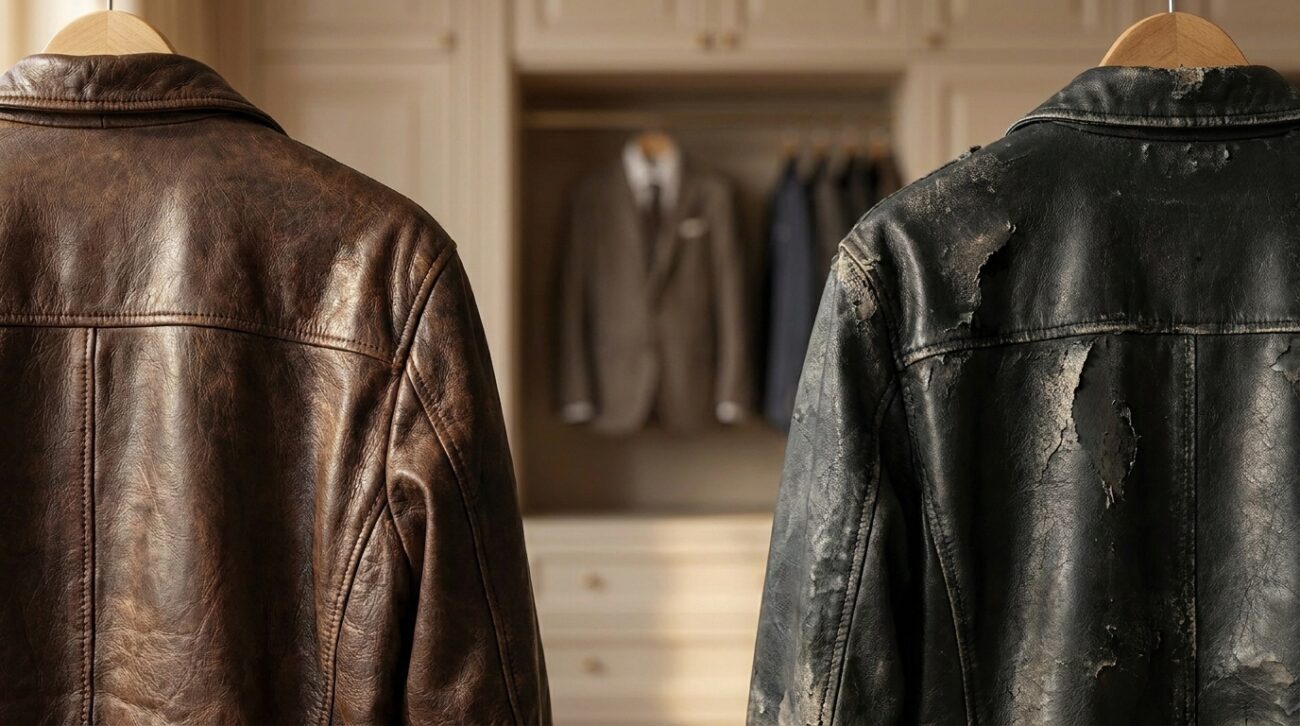
For example, a carefully constructed lambskin jacket can outlast a poorly made cowhide jacket. The material alone does not determine the lifespan of the finished garment.
If durability is your priority, inspect the entire jacket rather than relying solely on its leather type. Our guide to leather jacket hardware, zippers, and stitching explains the construction details that affect long-term performance.
Which Is More Comfortable: Lambskin or Cowhide?
Lambskin generally wins for immediate softness and lightweight comfort. Cowhide can offer excellent comfort too, but its feel depends more heavily on thickness, construction, and how the leather responds to wear.
Lambskin is often a good choice if you want a jacket that feels flexible and comfortable from the beginning. It works well for casual outings, city wear, and occasions where a refined appearance matters.
Cowhide is a strong option if you prefer a more substantial jacket that holds its shape. A well-designed cowhide jacket can become more flexible with wear, although thicker leather may remain firmer than lambskin.
The fit is equally important. A jacket that pulls across the shoulders or restricts arm movement will feel uncomfortable regardless of the leather type.
Lambskin vs Cowhide: Which Is Better for Different Jacket Styles?
The ideal leather depends partly on the design and intended use of the jacket.
Lambskin Leather Jackets for Fashion and Everyday Wear
Lambskin is particularly suitable for:
- Minimalist leather jackets
- Fitted biker jackets
- Leather blazers
- Lightweight zip-up jackets
- Smart-casual and evening outfits
Its soft texture and refined appearance complement tailored trousers, jeans, knitwear, and other wardrobe essentials.
For style inspiration, explore The Crown Leather’s guide to the best leather jackets for men in 2026.
Cowhide Leather Jackets for Rugged and Frequent Use
Cowhide is often a practical choice for:
- Traditional biker jackets
- Structured leather jackets
- Rugged casual outerwear
- Jackets intended for frequent use
- Designs that benefit from a firmer silhouette
Cowhide can also be used in fashionable and minimalist designs. Its suitability depends on the leather’s finish, thickness, and the jacket’s overall construction.
Important: A fashion leather jacket is not automatically protective motorcycle equipment. If you need a jacket for motorcycle riding, check its protective construction, impact protection, abrasion-resistance performance, and relevant safety certification.
Lambskin vs Cowhide: Which Is More Expensive?
Neither material is always more expensive. The price of a leather jacket depends on the quality of the hide, leather grade, manufacturing process, design complexity, hardware, lining, and brand positioning.
Premium lambskin jackets may cost more because of the selection and finishing of the leather. Cowhide jackets can also be expensive, particularly when they use premium hides, substantial construction, and specialized hardware.
When comparing prices, consider the following:
- Leather quality: Look for clear information about the leather type and grade.
- Construction: Examine the stitching, seams, lining, and finishing.
- Hardware: Check that zippers, snaps, and buttons operate smoothly.
- Fit: Choose a jacket that fits correctly without restricting movement.
- Care requirements: Consider the maintenance needed to keep the jacket in good condition.
A higher price does not automatically guarantee better quality. Compare the actual materials and construction before making a decision.
For more information, read our guide to handmade leather jackets vs factory-made jackets.
How to Care for Lambskin and Cowhide Leather Jackets
Both materials benefit from appropriate storage and regular maintenance. Lambskin generally requires more careful handling because its soft surface can be vulnerable to scratches and marks.
How to Care for a Lambskin Leather Jacket
- Wipe away light surface dirt with a clean, soft cloth.
- Avoid excessive moisture and direct heat.
- Use only leather-care products suitable for the jacket’s specific finish.
- Test any care product on a concealed area first.
- Store the jacket on a broad, supportive hanger.
- Keep it away from sharp objects and abrasive surfaces.
How to Care for a Cowhide Leather Jacket
- Remove dust and surface dirt regularly.
- Follow the manufacturer’s cleaning and conditioning instructions.
- Avoid soaking the leather or drying it with direct heat.
- Store it in a cool, dry, well-ventilated location.
- Use a suitable hanger to help maintain its shape.
- Address stains and damage with appropriate leather-care methods.
Neither material should be assumed to be waterproof. Water resistance depends on the leather treatment, finish, and garment construction.
For more detailed maintenance advice, see our complete guide to the best leather jackets for men, which also discusses leather care and long-term jacket maintenance.
How to Choose Between Lambskin and Cowhide Leather
Before purchasing a leather jacket, consider how you intend to use it.
Choose lambskin if you want:
- A soft, supple feel
- Lightweight comfort
- A smooth, refined appearance
- A jacket for fashion and everyday casual wear
- A flexible material for fitted designs
Choose cowhide if you want:
- Greater resistance to everyday abrasion
- A more substantial feel
- A structured or rugged appearance
- A jacket for frequent use
- A material that can handle more demanding wear
If you are buying your first leather jacket, start with your lifestyle and wardrobe rather than choosing solely by material. A lightweight lambskin jacket may be ideal for urban fashion, while a well-constructed cowhide jacket may better suit someone who wants a tougher, more substantial garment.
The Crown Leather’s men’s leather jacket buying guide offers additional guidance on selecting a jacket style, fit, and material.
Frequently Asked Questions
Is lambskin better than cowhide for leather jackets?
Lambskin is generally better for softness, lightweight comfort, and a refined appearance. Cowhide is generally better for abrasion resistance, toughness, and structured designs. The better option depends on how you plan to wear the jacket.
Which leather jacket lasts longer, lambskin or cowhide?
Cowhide jackets often have an advantage in demanding, frequent-use conditions because cowhide is generally more resistant to abrasion. However, a well-made lambskin jacket can also last for years with proper care. Leather quality and construction are important factors.
Is lambskin leather too delicate for everyday use?
No. Lambskin can be suitable for everyday wear if it is handled carefully. However, it may show scratches and scuffs more readily than comparable cowhide, so it is less suitable for rough environments.
Is cowhide leather heavier than lambskin?
Cowhide jackets are often heavier because cowhide is commonly used in thicker constructions. However, weight depends on the hide, thickness, lining, hardware, and jacket design.
Which leather is softer, lambskin or cowhide?
Lambskin is generally softer and more supple than cowhide. This makes it a popular choice for jackets that prioritize flexibility, comfort, and a smooth finish.
Is lambskin leather more expensive than cowhide?
Not always. Premium lambskin can be expensive, but cowhide jackets also range from affordable to high-end. Leather grade, craftsmanship, design, and brand positioning all influence the final price.
Can cowhide leather jackets get softer over time?
Yes. Many cowhide jackets become more flexible as the leather responds to regular wear. The degree of softening depends on the leather’s thickness, tanning, and finish.
Which leather is better for a motorcycle jacket?
Cowhide is commonly chosen for motorcycle jackets because of its strength and abrasion resistance. However, leather alone does not establish riding safety. Look for appropriate protective construction and certified motorcycle protective equipment.
Final Verdict: Lambskin vs Cowhide Leather Jackets
Lambskin and cowhide both offer valuable benefits, but they serve different priorities.
Choose lambskin if softness, lightweight comfort, and a refined fashion appearance matter most. Choose cowhide if durability, abrasion resistance, and a structured feel are your main priorities.
Before purchasing, compare the leather quality, construction, stitching, hardware, and fit. A well-made jacket in either material can be a worthwhile long-term addition to your wardrobe when it matches your needs and receives appropriate care.
Explore The Crown Leather’s leather jacket buying guide to compare styles and find the qualities that matter most in your next leather jacket.